Humanitarianism and “doing good”
Every community, every part of the world has these histories that are never totally crushed and that each new generation rediscovers in new ways.
Rhea Rahman:It was often the more radical folks in the organization were black Muslims that I met that were saying in The US saying, as an American Muslim organization, why aren't we doing more in our own communities?
Suhaiymah Manzoor-Khan:Almost before you take the first step, your imagination is already limited in terms of what's possible. The war on terror preemptively limits the imagination of a young Muslim person.
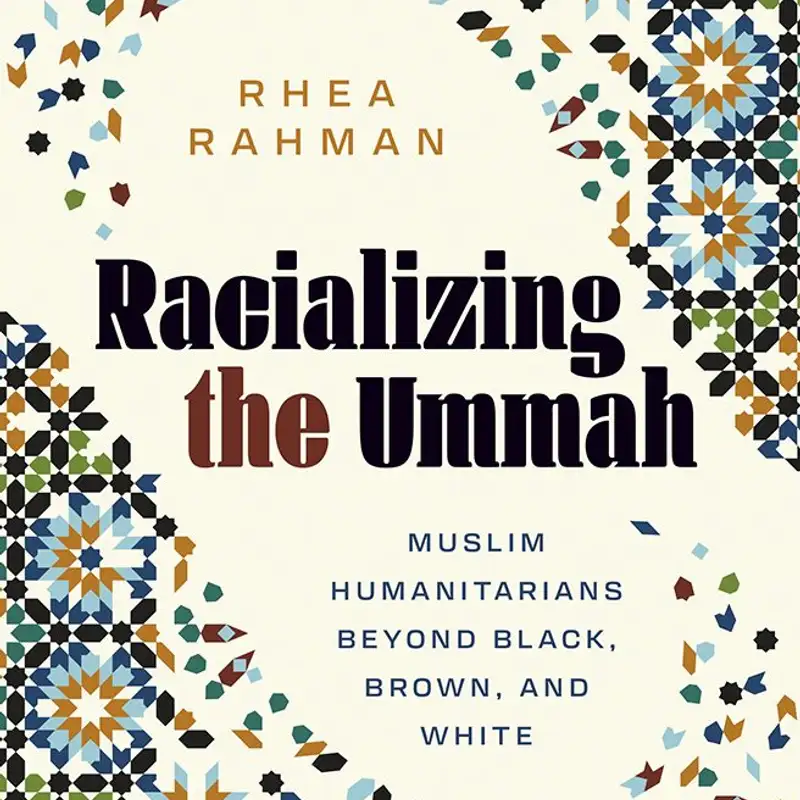
Rhea Rahman:Hi. My name is Rhea Rahman. I'm an assistant professor of anthropology at Brooklyn College City University of New York and the author of the recently published Racializing the Muslim Humanitarians Beyond Black, Brown, and White, published by University of Minnesota Press in March 2026. Today, I'm joined by Arun Kunani and Suhaima Mansur Khan. Arun is a writer interested in race, Islamophobia, surveillance, police violence, and radicalism.
Rhea Rahman:Among his books he's written are what is anti racism and the Muslims are coming, both published by Verso. And he recently began working as the editorial director of the monthly review press. And we're also joined by Suhaima Manfur Khan. Suhaima is a writer, poet, playwright, and educator from Leeds, England. Her work explores race, Islamophobia, power, and violence.
Rhea Rahman:She gained recognition with her viral poem, This Is Not a Humanizing Poem, in 2017, which I'm very grateful I got permission to cite in my book, and is the author of the poetry collection Postcolonial Banter and the non fiction works Tangled in Uprooting Islamophobia and Seeing for Ourselves. Her debut play, Peanut Butter and Blueberries, premiered in 2024, and her creative and educational work seeks to foster critical reflection and collective imagination. She also cofounded the Najma Collective, a volunteer collective of Muslims working in solidarity with people in prisons in England and Wales. Both of you and your work has been so important to my own thinking and growing and and learning as a person, so I'm really honored and grateful to have both of you here with me today. I'd love if maybe both of you could introduce yourselves to kind of ground us in where you're coming from in this conversation today.
Arun Kundnani:I'm really happy to be here, Rhea. I I live in Philadelphia, so I've lived in The United States for about sixteen years now, but I was shaped in terms of my kind of worldview and politics really by the experiences of being involved in South Asian communities in The UK when I was younger and the politics that I absorbed from being involved in activism in that setting. And that's what's informed my writing over the years, which has been very much around the politics of race and around movements that try and operate in that space. And very happy to be here to talk about your work with the many overlaps that it has.
Suhaiymah Manzoor-Khan:Yeah, same. Thank you for having us here, Rhea. It's very exciting. And I like the way you've kind of framed that how what shaped you are. And I think one of the most important factors behind the kind of politics that I have is having the opposite politics at some point by which I mean, I think spending a lot of my formative years, kind of internalizing, you know, white supremacy and wanting to be the good Muslim, quote unquote.
Suhaiymah Manzoor-Khan:And I think being in academic environments, where I was trained, I suppose, to formulate arguments in a certain way or use particular methodologies. And then I think the process of unlearning and being a racialized Muslim in England has been essential to all of this because I suppose I felt like I had done, quote unquote, all the right things. I remember on the day of my graduation from Cambridge University, it was also the day that the Brexit vote happened. So it was a very stark realisation that, oh, I've played the good Muslim card, but when I walk down the street with my hijab on, it's not going make any difference. Like, I'm still going to be framed as an outsider.
Suhaiymah Manzoor-Khan:So I think my own experiences have kind of fed into maybe a rejection of my former way of thinking and an intriguing curiosity around then what is it that has shaped the world I'm in? And also what might it then look like rather than trying to integrate into oppressive kind of power structures? What is the alternative? What would it look like to try and dismantle them or at least to reveal and expose that they exist?
Rhea Rahman:Thank you so much. There's so much resonance with both of what you've said, particularly this unlearning. I think that's so much of what I was trying to do with the book, the the good Muslim and for me understanding that in terms of a racial project of white supremacy. A bit about the book, it's an ethnography of Islamic relief, which is known as the largest Western based Islamic humanitarian aid organization in the world. And an ethnography of Islamic relief allows me to explore ethnographically the kind of questions that come up of being Muslim in the global North, in the West, and these orientalist assumptions that there's some imaginary of the West that is inherently incompatible and distinct from some imaginary of what it is Islam.
Rhea Rahman:The guiding question for the book is what does it mean to do good? And I think, Suhaima, what you were saying of unlearning, I think that process, what I learned was doing good, you know, for myself as a child of immigrants from Bangladesh and being five years old. The first time I grew up in this very white cookie cutter suburban neighborhood in Michigan. And when I was five, we went to Bangladesh for the first time. And it was so stark leaving the airport and seeing people crowd my family's car.
Rhea Rahman:You know, it was just the level of poverty and inequality that part of the suburbs is to like, move away from any kind of suffering or... And so grappling with the question of that disparity or inequality, you know, the first answer that came to me was, oh, development work, and I should try and help Bangladesh develop. And what I get towards in the book is like, right, that's upholding the the inequality as it is. I I worked at an NGO for a year in Bangladesh, and I was so disillusioned with the process. It felt like this self perpetuating kind of machine that wasn't actually about getting at the root of the disparity or inequality.
Rhea Rahman:And so I wrote a master's degree on kind of that and a critique of development. And then when I started my PhD, was interested in humanitarianism and looking at Islamic relief as an organization that starts in The UK, most... Founded by mostly Muslim immigrants in in Birmingham. It forces a confrontation with that assumed dichotomy of of how does Islamic relief negotiate being both a Western organization. It has to have approval from the UK government and the other...
Rhea Rahman:You know, now it's a global institution with fundraising partners in other countries in the global North and projects in over 30 countries, mostly in the global South, it has to uphold... You know, the founder of Islamic Relief once said one of the early questions for the organization was, how do we get the West to trust us and the Muslim to not suspect us? And that's really kind of a driving question of how does Islamic relief negotiate these these tensions and and contradictions as it tries to do international relief work. I start off the book with kind of historically situating Islamic relief. And, you know, I can't talk about British Muslim organization without historically situating why and how are Muslims in The UK in the first place and pushing back against a story of kind of the rise of a multicultural Britain that comes out of World War two that erases a story of empire, nation, and race.
Rhea Rahman:Arun, it's really through engaging with your work that I learned of a r sivanandan and his line of we are here because you are there. And so much of your book, what is anti racism, kind of goes into that chapter of what the British did in South Asia as what, you know, completely incapacitating a a form of kind of self sufficiency or sustaining life in the colonies, just why then, and the whole history of immigration in The UK, people moved from being subjects of empire, and the whole immigration policy was for when black and brown subjects of empire start wanting to come into The UK. You know, I kind of start off with, you know, we can't think about Islamic relief without this history. The book wasn't planned to be as multisited as it ended up being. The war in Libya destabilizing the region of West Africa really kind of forced my research to go in different sites.
Rhea Rahman:I spent some time in The UK, and I have a chapter on, you know, Islamic relief moves from being a relief organization into being an expert on human Islamic development and policy. And they're developing these policies at the same time that the UK government is pushing the prevent strategy. And so that chapter kind of grapples with what does it mean for Islamic relief to be developing, you know, policies on development issues at the same time that the UK government is funding Islamic relief to produce these policies at the same time they're invested in this project. And then I spent the... Because initially, I was trying to do work in West Africa and I spent time in Chad and Niger, and I couldn't go back to those countries.
Rhea Rahman:I spent time in Mali because at the time, that was the most politically stable country in West Africa, and I was there for the coup in 2012 and had to leave. So then I ended up in South Africa and spent a year there. And so I have a chapter on that where I'm grappling with what I propose in the book is this idea of an Islamic black radical tradition, Suhaima, what you were saying of, like, what's the alternative of... Rather than integrate. And so in that chapter, I kind of...
Rhea Rahman:I go into a history of the term racial capitalism, which is... You know, it's become rather prevalent in kind of organizing and academic circles. The first people to use that term were South African Marxists to explain the kind of way capitalism was working in apartheid South Africa. And then the last two chapters, I I talk about, you know, more focused on Mali. And when I was there, I was overlapping with a group of fundraisers from The UK, mostly from kind of working class areas in Northern England.
Rhea Rahman:They were on a fundraising trip in Mali. That really allowed me to look at how these different actors being racialized in these different places, the similarities or tensions that arise. So for these British Muslims, mostly of Pakistani descent, racialized in a particular way in The UK, they're doing good kind of is a way to prove themselves good Muslims. And then from another lens, looking at development in Africa as a way of upholding a global system that continues to exploit Africa. Right?
Rhea Rahman:They're relatively the kind of white adjacent savior. So... You know? But they're not white because their context are coming from The UK. So by accident, you know, my work being in all these different sites then allows me to kind of look at the, you know, specificity of how racialization is happening in these different sites and the kind of implications of the movement of these kind of racial logics transnationally and how that's kind of forced when looking at a transnational Islamic organization.
Arun Kundnani:You know, I'm struck by so many things. We're all bringing our kind of origin stories to the table here, right, in different ways. And I think what you said about, you know, your experience of being in Bangladesh and then wanting to do something, to do some good, right, around that, and then your disillusionment with development work. What strikes me about it is just how think how common that is for so many people. And I think particularly people who have ancestry in the global South who are living in the West, right?
Arun Kundnani:Like there's something very specific about that, which is also what's going on with the British Muslim charity workers, I guess is the term that you talked about who who are doing this work in Mali. Right? And and I guess what I wanna say first is that that desire to do good that comes out of us being in this kind of in between space. Right, which I think is important to see as a generative space, right, not as the between two worlds or the loneliness of being between two worlds, we're never quite at home anywhere, that kind of idea. Like, I see it as actually that's a place that's a place of creativity and imagination and it's incredibly generative.
Arun Kundnani:But one of the things it also does is generate a kind of rebellion, which I think is ultimately what lies behind that doing good, even as that doing good finds itself landing in all kinds of structures and forms of expression that without us necessarily being aware of it, reinforce the very structures that we start off recognizing, seeing, feeling some discomfort with coming out of our own experience, right? Because when we go to South Asia and see the poverty there, we're also seeing that as we know on some level, even if we can't articulate it like this at a young age, we know on some level it's the same thing that's causing that poverty as what's caused us to feel a bit of an outsider where we are in that suburb or when we fear violence in a white majority society, right, because of the racism that we sense, even if we don't even know that word racism yet. I mean, when I was a teenager, you wouldn't use the word racism at all to describe, and this was in the 1980s, this is not some kind of, you know, it's not like there hadn't been a long history of anti racism in Britain, but certainly in the context I was in, you wouldn't use the word racism to describe the actual racism that South Asians were experiencing.
Arun Kundnani:Like, racism was something that happened to black people. Black people understood as people of African origin, probably only African Americans. You know, like in Britain, it was somehow something different. But you felt it, right, even if you didn't have the words to describe it. And you understood that there was something going on that also when you when you visited families in the subcontinent was also somehow going on there in different ways.
Arun Kundnani:Then we we are channeled, right, by the system. Neoliberal racial capitalism, what, you know, what you're saying to me is neoliberal racial capitalism or whatever whatever terminology we wanna use to describe the big picture of the system here isn't able to totally capture everything, right? It can't capture our minds and our spirit to such an extent that we don't feel that there's something wrong here, right? And that there's something we want to take action against and do something about. So it has to take that sentiment and channel it into something that serves its purposes.
Arun Kundnani:Right? And really, I feel I feel like that's the story of your book that you're capturing really well so that you end up in a situation in which people who've wanted to do something about a discomfort, an anxiety, even an anger that they're feeling about the world end up going to somewhere like Mali and effectively implementing a new imperial agenda, right? It's a little, I mean, to me, an analogy here that springs to mind is the discussions of African Americans who join the US military, partly out of the complete denial of opportunities to have a stable income and so on and so forth, right? And constrained options in all kinds of ways. But also, to some extent, a sense of, this is how I do something positive in the world, right?
Arun Kundnani:They're sold on that mythology. And also this is how I present as a respectable African American, right? I'm serving, I'm patriotic, right? It's the respectability politics of that. And then ending up in a situation where they're part of a neo imperial war machine, and it doesn't really make any difference if you're that family in Yemen that's drone bombed, whether it's the African American behind the screen operating that drone or it's a white person or whatever, right?
Arun Kundnani:Like it's the same. It's near imperial violence, right? And so there's something similar there, not quite the same, but there's something similar there, right? Of how racialised groups go through a kind of cultural and psychological journey in a very constrained political and social and economic context to become the faces of imperialism.
Suhaiymah Manzoor-Khan:That's super interesting because it's just bringing to mind the almost like the exhaustion of essentially trying to like remain on your toes. So you're not co opted into these kinds of exactly like you said, being the face of unwittingly often the face of these imperial agendas. And it's interesting because I'm just thinking about how often, and perhaps this is maybe this is not accurate, but in my mind, when we talk about like the good Muslim, bad Muslim binary or something like that, it feels quite like an individual thing. Like we're talking about how people are presenting, how people are trying to appear to be integrated within white supremacist workings and they're not posing any threat to it. But I think when we zoom out, as you are talking about with Islamic Relief, to that organisational level, I think it also feels really complicated because it's like, just on that question of doing good, you you take a bunch of individuals who do want to do good.
Suhaiymah Manzoor-Khan:And then just like what I'm thinking about in relation to what you were saying, Arun, in terms of creativity and all of that is like how almost before you take the first step, your imagination is already limited in terms of what's possible, in terms of what is charity, what is doing good? That's your primary question, Ria. But I think in some ways, like you said, why was your first instinct to go work in development? What conditions mean that that is the primary avenue through which we see doing good? And likewise, I'm just thinking about how the way that the war on terror preemptively limits the imagination of a young Muslim person, and indeed non Muslims as well, in terms of what feels like a safe or non threatening or whatever kind of way of doing good work.
Suhaiymah Manzoor-Khan:And I know you were writing this obviously during the genocide as well in Palestine. Just thinking about how we did an event with you in Manchester a few weeks ago, and I remember there was a girl who talked about putting on a bake sale to raise some funds I don't know, maybe it was medical aid for Palestinians, something like that. And just how that was then deemed suspicious, threatening, dangerous, why that always feels so outrageous to me. Although in some ways it is kind of exciting that you can be a threat just by doing something as small as having a bake sale. It also is this thing of your imagination is constantly being limited in terms of what even good is, what even like solidarity is, what even resistance looks like.
Suhaiymah Manzoor-Khan:And I think, yeah, when I just take that in tandem with like them being an organisation, because I'm just thinking about me as an individual, as a person who might like writing poetry or plays or whatever, like that's interesting already. But when I then scale it up to an organisational level, it feels so difficult because it feels like you're essentially being groomed, I would say, from the state, from these bigger institutions that exist. Doing good has to operate within this particular field of what's already been designated historically as appropriate and safe and non threatening. And I suppose, yeah, I'm just really interested in both things. Suppose like how you take a bunch of individuals who probably are quite, you know, excited and interested in being beneficial to the world around them, and then how you completely crush and limit the imaginations of those people.
Suhaiymah Manzoor-Khan:What procedures, what policies, what ideas, what processes, what histories are behind that. And I know that's exactly what you explore in the book, but I just think that's such an interesting and important thing to reveal. And, yeah, I wonder what thoughts you have on that.
Rhea Rahman:Yeah. You know, I did an event in Detroit and I had connected with some organizers at this, like, mutual aid organizing event. And I learned about this organization in Detroit, Dream of Detroit, a Muslim community led organization, and they do things like community land trust to build long term sustainable housing. And I asked them to come to the event because I was like, this is when I imagine doing good beyond or otherwise. Right?
Rhea Rahman:Like, that the things I'd point to in particular in the chapter in South Africa. You know, I think everyone has a a genuine intention of doing good that come into Islamic relief. And I think something that has stayed with me is, like, what... Even for thinking of, like, us in the room right now of, like, what is our own process of kind of unlearning? One, when I talk about Islamic relief, it's like a global family.
Rhea Rahman:Like, it... There is no version of doing good of Islamic relief. It depends on who you're talking to and what their particular interests are. So the chapter about the policy, the folks who are in the research and policy unit for Islamic Relief Worldwide in Birmingham, they're in the development world. Like, so that's their interest.
Rhea Rahman:That's kind of their community. So for them doing good is being like a Muslim voice at the table. And that is so tied up in state interests. And that's their version of doing good. And then for these, you know, black Muslims in South Africa that were kind of grappling with what does our community actually need?
Rhea Rahman:Okay. So we're in an organization and they're saying we have to... You know, the Islamic Relief is trying to professionalize and we need, like, names and and kind of ID numbers of everyone that's working in the community center. And the folks there are like, we can't do that. Like, there's a lot of folks from Lesotho.
Rhea Rahman:There's lot of folks from Zimbabwe that don't have papers that we're giving them food parcels. But if we now have to record their names and numbers, like, we won't be able to. But, you know, for them doing good was like, how do we get around this so that we can actually serve our community? So, yeah, you know, it's interesting thinking about the event in Manchester when we asked folks, you know, what visions of doing good do they feel inspired by? A theme was sort of feeling limited by once you scale up.
Rhea Rahman:Like, once you, you know, you talked about with the Najma Collective of, like, once you start collecting a certain amount of money, another friend and colleague with the Sudan Collective was saying a similar thing. They were taking kind of, you know, dollars 10 donations for mutual aid in Sudan. But once you reach a certain amount, then you have to kind of work through institutions. I veered away from like the initial of the Detroit and the Detroit event where folks were saying to me, oh, are you gonna sit down with people in Islamic relief and kind of offer what you've discovered or this critique? And I...
Rhea Rahman:You know, my response was, a, it's not really a critique. It's trying to understand the constraints that Islamic relief is operating in. The model in the book of doing good otherwise is also coming from people in the organization. I mean, like, there's already people in the organization imagining otherwise. They don't necessarily need, like, me to be doing that.
Rhea Rahman:But it is a effort, and I'm curious with, like, both of your work as well of, you know, sharing this is, I guess, I had my own process of unlearning. You know, I thought doing good was that, like you said, Arun, like channeling the neoliberal racial capitalism, like the doing good gets channeled into something that serves its purposes. And it took a long process of unlearning. I did two higher degrees and still kind of thought, oh, development. It took the conversation of of Black Lives Matter, forced me into a different way of thinking and thinking like, Oh, wait, this is anti black.
Rhea Rahman:Like, why am I as a non black person of color going to Africa? Why? Because it would honestly would have been harder for me to go to Bangladesh or South Asia. Because like, I do have family, do have connections and the privilege of being able to just kind of go wherever I wanted and being forced to confront my own anti blackness and and seeing how my own analysis, or my own thoughts of doing good were kind of aligned with with upholding kind of neoliberal racial capital ism. It was often the more radical folks in the organization were black Muslims that I met that were saying in The US saying, as an American Muslim organization, why aren't we doing more in our own communities?
Arun Kundnani:I take your point that it took you a long time to do this unlearning, Ria, but you were obviously unable to settle in the framework that the system wanted you to settle into. Right? Like, it might have taken you a while to sort of articulate exactly what you felt was an analysis of the limitations of it and so on, which became your intellectual project, right? But it sounds like you weren't persuaded fully. So that, I mean, that to me, that's telling, and I wanna almost like kinda hold on to that moment as well as, you know, we can do the analysis of like how sophisticated the system is in terms of like grabbing these good intentions and completely crush the imagination.
Arun Kundnani:But I don't know if it does completely crush. I think we kind of go through this process of trying something to find a place where we can have our particular experiences and feelings recognized in the system, but it doesn't work. And then we would try and improvise some new space and it doesn't work. And that's what's interesting to me because it's that process, right? Like, the system wants us to be fixed in our identities, right, and to be stable in our identities.
Arun Kundnani:So like, okay, you Muslims, this is who you are. Right? This is the definition of Islam that you have to uphold to be acceptable. And we like the stability of that. Right?
Arun Kundnani:Predictability of that. But what actually happens for us is that we're always in these unstable situations. Right? It might feel stable for a moment that, like, oh, yeah. Now I know who I am, but it never really does.
Arun Kundnani:The contradictions within the system are always playing out. We can't reconcile our comfy life in the West, if we're lucky enough to have one, with what we know is going on with our cousins and our ancestors and our families elsewhere in the world, right? We can't live with that contradiction and be comfortable in it and accept it. Right? So we...
Arun Kundnani:We're like, okay. No. I need to find some way to kind of go to some new place. Right? And that's the process of radicalization.
Arun Kundnani:Right, in a good sense, right? Not the counter radicalization policies way of thinking about it, but that's precisely the radicalization that we need to hold onto. Right? And, you know, like in my work, I'm thinking about... I have a book that's gonna be coming out next year.
Arun Kundnani:There is a biography of someone who is a black Islamic activist who came through the civil rights movement in The United States in the sixties. This is someone who would be known by the late sixties as one of the leading figures in the black power movement, H. R. Eppraud. At the time, at least, a famous black revolutionary, right?
Arun Kundnani:But where'd he start? He doesn't start there. He isn't born like that, right? He starts in a place where he's trying to do the respectability stuff. He starts in a place where he's on this journey of like, okay, well, the system says that we live in this liberal democracy, so we should be able to lobby and participate in the official political process in the way that we're being told from Washington DC how you're supposed to do it, and you participate in the Democratic party and you try and get your politicians that you prefer elected in to follow the rules, play the game.
Arun Kundnani:Right? And then at some point, oh, no. That hasn't delivered for the kind of change that I started off expecting. So now I'm gonna try something else. This is constant process of improvisation, which is also a process of radicalization so that by the time you get to the end of that decade, he's in a place where he say, no.
Arun Kundnani:Let's overthrow capitalism, racism, and imperialism. Right? And how do we do that? What's the agency we need to do that? We need to build a international movement, right, that links the struggle of of black people in The United States to the struggle of Palestinians.
Arun Kundnani:He's talking about Palestine, you know, to the struggle of Puerto Ricans, to the the struggles happening in Southern Africa, to the Vietnam issue. Right? And that's... To be honest, there's something very similar to that. You've mentioned Black Lives Matter.
Arun Kundnani:Right? There's something very similar to that happening with that generation now of young people who... The teenagers who were on the streets in 2020 after the murder of George Floyd, then became the students who were in colleges over the last few years who were involved in the pro Palestine encampments. Right? So they went on that same journey of starting off with, like, one particular issue of police racist violence in The United States.
Arun Kundnani:But then as they tried to respond to it in various ways, slowly learned that actually you need to think about the whole whole system. It's not just racism, but imperialism and capitalism. Right? And they link these things together in creative ways. This is what I'm interested in is how inspired everything, that they try and do.
Arun Kundnani:These things still keep happening. I think in your work, where have those moments, right, where, as you say, being... Doing doing good beyond the way that it's handed down to be the acceptable ways of doing of be... Of doing good. That that spring up, right, in...
Arun Kundnani:Within, particular settings, where Islamic relief is working. Sometimes it's, as you've been implying just a moment ago, influenced by the movement work coming out of black movements in particular perhaps, right? But it's there, right? And actually, I wanna say that every population, every community, every part of the world, every cultural religious tradition has these histories that are never totally crushed, right? And that each new generation rediscovers in new ways and reinvents.
Arun Kundnani:And sometimes it's submerged for a period of time. Like when I was a teenager, it was submerged, the 80s and 90s, it was submerged. But it can never be completely crushed. It comes back in new ways, you know, almost like a kind of subterranean river that bursts out again in some new way, in an unexpected way, you know, that's also something that we need to hold on to.
Rhea Rahman:I think it's helpful to hear that to hold space for the kind of dissatisfaction, like knowing something's off with the way it's going without maybe respect for the process of knowing something. This doesn't feel right. It takes intention and process, like, because the system wants to cut us off from that subterranean river, right, like, from the the knowledge and strategies of our of our ancestors and generations before. And, yeah, there's a a reason it feels hard or a process to unlearn, but that that is there. And just thinking of this particular moment, Black Lives Matter in 2013, 2014, again in 2020, the encampment movement.
Rhea Rahman:And I heard an organizer talk about this recently of the gap between the material conditions that we're living in and the kind of radical imagination horizon just seems to go wider. Like you write about in, you know, in 2020, the people in Minnesota burned down a police station. And now we have, like, unrestrained ice, billions of dollars going into and I don't know what to do with that. But that's just something that comes to, you know, thinking of that subterranean river that's there, and these kind of moments of revolutionary, like uprising and the backlash against it.
Suhaiymah Manzoor-Khan:I'm totally with you, Aaron, and I'm but I think but I guess my but it's not really but but it's kind of like, I think this comes back to I guess something that you thought a lot about both of you a lot which is the kind of movement building element of this right because I that word crushed let's just take for example I feel like speaks more to the exhaustion of sort of individuals kind of, you know, going on that journey that we've all just described and then that not being sustainable. Right. And then I suppose just to like, maybe explore myself what I'm thinking right now. Like just, I'll just say a little bit about the Najmah collective experience, because I think it does speak really to what you were talking about Ria and like what we were attempting to be was volunteer Muslim led organization who support people in prison. And actually this came about off the back of the twenty twenty Black Lives Matter movement.
Suhaiymah Manzoor-Khan:We saw a lot of conversation amongst my friend group and kind of peers. It felt like a lot of conversation about abolition that was based in The US. And we felt very aware that, you know, The US is just like Britain is the real problem. Right. And so we kind of wanted to explore if this is the heart of the Metropole, if this is, you know, we have prisons here, we have races, you know, the kind of mother of all of that here.
Suhaiymah Manzoor-Khan:So we were interested in that and more so that Muslims in prisons in The UK make up like a really disproportionate amount. So it's kind of three times the amount of the percentage of what the population of The UK is Muslim. So 6% of the, I'm phrasing that terribly, 6% of The UK population being Muslim and 18% of the prison population being Muslim. So that's the context. What we don't want to do is exactly what you've all just talked about, like replicate this kind of, for example, prison reform.
Suhaiymah Manzoor-Khan:We're not talking about improving prisoners. We're not talking about improving people's experiences. We're saying how... What would it look like to have an abolitionist stance? We don't think prisons are a good solution to social problems.
Suhaiymah Manzoor-Khan:We think that Muslims are disproportionately represented because of Islamophobia, racism, capitalism, colonialism, history, all of these things. Right? So we have that. And initially, our idea is like, let's just we don't know what to do because we don't we want it to be led by people in prison. So should we just, for example, to create that moment of contact, raise some money, which we do in Ramadan successfully because, you know, Muslim community are willing to give that say to people, you can apply for a grant with us if you're in prison.
Suhaiymah Manzoor-Khan:We use that then to just get in touch with you, just to ask you, hey, what is it that would actually be useful for you? Like, what do you feel like? What's what's missing? What would be amazing to have access to? Now, what very quickly happens is actually, which we never intended to be, was to be a grant giving organisation.
Suhaiymah Manzoor-Khan:That was never my dream. That's not what I believed to be like, you know. But everybody in prison is in desperate need of funds, right? Because it's just like this horrifically oppressive environment where actually your agency is stripped through the fact that you can't buy the food that you like to eat. You can't buy the hygiene items that you like to be hygienic.
Suhaiymah Manzoor-Khan:You can't wear the clothes that you would like to wear to feel modest or because you've gained weight or you've lost weight because of the horrific circumstances you're in. So very quickly, it all spirals out and we become like, we're just giving out loads of money, we're raising money. And so then there's the like the external element, which is interesting in terms of, you know, very quickly we get a letter and sorry, I'll keep this story brief, but very quickly we get a letter from the charity commission saying that, why are you not a registered charity? And this is really bizarre. When I speak to lawyers, they're like, usually everybody's having to prove that they are a charity.
Suhaiymah Manzoor-Khan:This is so wild that you're having to prove that you're not a charity. We had very deliberately not been a charity because we didn't want to adhere to those state policies that you talked about, or you implied. And we didn't want to play any of the... Our website is very clear that we think the West itself is a problem and all of these big statements that we felt we wouldn't be able to make if we were a charity. So anyway, we go through this whole process of having to prove that we're not a charity, despite the fact that we are giving grants.
Suhaiymah Manzoor-Khan:And in the midst of all of that, we have to set up a bank account because at the moment, the funds are just being held in some random important tier's bank account. We go to some bank account and the first thing that they ask is, well, who is the money coming from? Because it's just random Muslim people, right? So there's this implication that there's a suspicious group from which the funds are coming from, but also the group you're giving the money to is inherently suspicious by the fact that they're criminals and convicted. You know what they're convicted of.
Suhaiymah Manzoor-Khan:You know, why are they in prison? And we don't ask. That's part of our policy. So my point in kind of painting this picture is that after sort of two or three years, both the external kind of trying to navigate all these things and trying to not let go of our principles. And then the internal wanting to do something radical, different, more than just reform, you know, go and meet people in prison, build relationships of solidarity, kind of help people have agency beyond what the prison walls allow.
Suhaiymah Manzoor-Khan:Whilst we saw amazing kind of things that connection can do and while, you know, personally received letters that I find so moving to this day, it was impossible for a group of four or five volunteer Muslim women who themselves are experiencing everything that's changing in Britain around us, world around us to continue. And actually, to be honest, lot of those volunteers end up channeling a lot of their energy towards pro Palestine protests and all the, there's so much else going on, right? So I recently stood back from kind of being actively involved whilst I'm still a co founder. And I think, I guess I'm just naming all of this and reflecting all of this to say that for me, thing that I totally agree that we, that radical imagination exists, there's such strong histories of it. And it can never be crushed because people will always feel so.
Suhaiymah Manzoor-Khan:The fact that we could always raise funds from just ordinary people in the population proves to me that people are very ready and willing to agree that prison is not a good thing. Very easy to get people to agree to that. But it's the building of the movement element that is just so that is what felt like just hitting a brick wall, right? Like that once, if I step back, I'm exhausted, how many months till the next person sets back and they're exhausted? And that's the bit that feels really unfulfilling, I think, to me in this moment.
Suhaiymah Manzoor-Khan:So, yeah, I'd love to hear both of your thoughts on that. And I suppose from what you observed as well, where you're like, you talk about these people on the ground, like Abdullah and Dawud and people in South Africa who are really like, they are responding pragmatically to the needs of the people. And they're managing to do some cool things by kind of evading what the top down people want. And they're still using that money in a cool way. But yeah, like what happens when Dawud, you know, I don't know, like what happens if someone just gets ill?
Suhaiymah Manzoor-Khan:What happens if someone's parents are well and they start needing to care for them? And there's all these other things. So I'm just, yeah, I'm just curious, like, what you both think about that.
Rhea Rahman:Yeah, you know, Abdullah, who I talk about him when I, when I've given book talks and people really like attached to him and he wasn't there when I went back, I went, you know, I was there 2012 to '13 and I went back in 2019 and I couldn't get ahold of him. He was he was miserable at Islamic Relief when I got there because he had been already moved from his position as an HIV and AIDS, you know, and gender justice officer to cold calling fun, like fun, you know, he was just on the phone making cold calls to get funds. You know, in this active, all of these projects that he was working on, he just felt really stifled and frustrated, you know, and he said that I was told to stop because it didn't bring any fruits. And he's like, what fruits are we talking about? Is the is the purpose of Islamic Relief to bring money?
Rhea Rahman:Or is it, you know, he had started this after school program and had volunteers and, you know, so ultimately he left and I didn't stay in touch with him. He came from an organizing background, part of this black Muslim community in Soweto. And he had said, you know, like we kind of formed this holistic movement to kind of think about issues particular to our community. So I don't know if he kind of continued on in organizing spaces as opposed to what we might call the kind of institutional. But yeah, I don't...
Rhea Rahman:So I can't speak. From what... And then... And the other person I spoke about, Dawood, who I met afterwards, that even feels tricky in terms of people have asked me if I've shared my my work with people in Islamic relief. And, you know, he was someone that I I did, but then I didn't hear back.
Rhea Rahman:I can only assume he has his daily life. I don't know if he has time or space or interest in reading my article and going back. Because the element of it that you're talking about, Suhaima, is just the material conditions of living. And... Yeah.
Rhea Rahman:So I don't I don't really know, you know, in terms of the folks that I met in Islamic Relief, if that was sustainable long term within the organization or not. I do think that in terms of thinking about the movements that I'm overlapping with as well at City University of New York, like the Palestine organizing, it is really hard to kind of keep that kind of sustenance of it because we continue to get bombarded. It's so hard to have a focus on an issue because you were saying, like, okay, that it was kind of focused on people in prisons and then and then Palestine and something about this moment that feels like overwhelmed from so many different sides and so many issues, especially, like, in The US right now. What's happening to higher education? What's happening to the targeting of any kind of, like, activist?
Rhea Rahman:Anyone that's not... You know, going back to the beginning of, like, if you're doing good is not channeled to serve the interests of the neoliberal racial capitalism, the kind of force of military police state repression that's that's coming towards any effort that's trying to name or challenge that.
Arun Kundnani:I mean, think this is... Everything that you've both just said is just really interesting just because I think it goes to the core of something very important about how power works. Part of what you're saying in different ways, each of you to me, this question, part of how power works is that it provides a framework for us to organize against ourselves. When you talk about putting together a project, Sohama, like the one you were trying to do, completely autonomous from the state and from official Britain, the story that you told about that is so powerful because you're really trying to do something completely on that principle of complete autonomy. And it's so hard because everything has to be organised by you as volunteers.
Arun Kundnani:Right? And so all of us who... You know, like the story you told in different ways would be the story that thousands of activists would tell, who are trying to do some equivalent kind of project on the principle of like, we are gonna operate autonomously from these forces. And it's just like, a material fact, it's just really, really, really difficult because of exhaustion, just because of lack of resources, including the resource of time in our lives. And so what the state does is the state is nothing but a highly organized system itself, right?
Arun Kundnani:Like, we're trying to organize ourselves, but they've got themselves organized within a massive elaborate structure that's well resourced, right? And they can create an infrastructure for all kinds of things to happen that work against us. But all it is is they're well organized, right? They're well organized, again, as a material fact. There's nothing kinda mystical about the state.
Arun Kundnani:It's just like a a bunch of people that are well organized on behalf of a certain class and so on. You know, so in this situation, part of what has happened historically... And by the way, Ray, it's it's wonderful that your book is provoking these kind of conversations about really how do we do this change that we're talking about, right? This is like exactly, I think, where your book takes us. When we get to that question then, in the past, where we've actually been able to kind of create something is because if we organize ourselves a little bit, we can then open up spaces in the state where we can start entering the state a little bit, grabbing some resources that then helps us to actually move forward on our agenda without necessarily being co opted by the state.
Arun Kundnani:Right? Like there've been place... There's been times and places where that's been possible. Right? Where because of the kind of balance of political forces in the world or whatever you wanna call it, it hasn't been like an absolute thing of like, oh, if we sign up to get some state funding, or if we try and get some of the people who have our politics into elected office and get them to kind of try and push things from that position, that they're immediately gonna be co opted.
Arun Kundnani:No, sometimes there's been openings there, right, that people could exploit, and then we get some resources, then we can start to actually use those resources to build our organizations and so on and so forth. And sometimes, you know, like we might send, you know, 30 of our people into that kind of situation where they're employed in one way or another as part of a system, and maybe 20 of them get corrupted by that and start to enjoy their comfortable lives and their income and the prestige and everything, but 10 don't, right? And those 10 can say, okay, well, I'm not really allowed to do this, but I'm gonna throw this money at you a little bit under the radar and you can use that to do this stuff that you wouldn't otherwise be able to do, right? Because building movement is a material thing, right? We need resources.
Arun Kundnani:We can't do it with nothing. Where are we gonna get those resources from? Sometimes we can get them from the state and it's not necessarily gonna be completely co opting, let's do it. But the problem today, the reason why every activist today is completely exhausted and battered down and crushed is because the state is much more brittle now. It doesn't give anything.
Arun Kundnani:It doesn't allow those spaces. Like whether you're talking about The US or The UK or most of the rest of the world, to be honest, they don't feel the need to compromise. They don't feel the need to open up a little space of negotiation and give and take. They think they're in complete control and they don't need to give anything. It's a very brittle form of power, which means that on the one hand, you keep banging up against it and there's no kind of give and take.
Arun Kundnani:On the other hand, when it does break, it's gonna break very quickly. And let's hope that day comes sooner rather than later, because in the meantime, we're banging our heads against this thing and it feels really hard. But I think we could probably bear in mind a few... Sometimes I think that because I have lived in The United States for more than a decade now, I've kind of absorbed that kind of American positivity kind of thing. I've lost that kind of British kind of, like, cynicism about everything.
Arun Kundnani:You know? So, like, when we get in these conversations, I feel like now I'm like the guy who's always like, yeah. But, you know, it's gonna be okay. We can do this and this and this, which is maybe another kind of way that I've been co opted into into an unrealistic view of the world or something. But I think, like, the way to try and think ourselves out of this kind of feeling of there's nothing we can do.
Arun Kundnani:It all feels overwhelming. And I think this is where your book is really helpful, Rhea, is, like, let's put ourselves in their shoes for a moment. What do they feel they need to do to hold us back? Right? And not just tell that story in terms of how easy it is for them, but actually, it's quite difficult for them.
Arun Kundnani:They have spend a lot of time trying to say what Islam is in their interests, right? Like, they're not just saying, oh, we'll just let Muslims define Islam for themselves and define their communities for themselves. No, they have invested huge amounts of resources to intervene into the space of Islam globally and say, We want it to be this, and we're gonna keep working really hard to try and push Islam and Muslims to be this, who we want them to be, right? So the fact that they have to do that tells you there's a space of power and resistance there. And therefore, there's...
Arun Kundnani:With prevent, you see this quite clearly if you look at the history of it, right, where, you know, they introduced this policy that requires Muslim community partners for it to be effective. And to start with, Muslim community partners sign up to it quite happily and breezily, right, in that way that we were talking about earlier. Right? Oh, yeah. Well, this is great because we get funding for the things we need to do in the community.
Arun Kundnani:And and then after a little while, they're like, wait a minute. Wait a minute. I don't wanna be a partner anymore. This feels like this is actually a surveillance project. This is a project that works against us, so I'm gonna pull out.
Arun Kundnani:And after a little while, you're looking at a situation where this project that billed itself as a project of community partnership no longer has any community partners. So they have to shift. They have to do some work. They have to go somewhere else. Okay.
Arun Kundnani:Now we're gonna make teachers and doctors. And these people who are in professional roles within the public services, they're gonna be the ones that we partner with to do this instead. Right? Okay. So then to start with, yeah, teachers are like, great.
Arun Kundnani:When these difficult conversations come up in the classroom about Islamic radicalization or about, like, discrimination against Muslims or whatever, great. Now I don't have to worry about that. I can just refer it to prevent and someone else will deal with it. Wonderful. And after a while, they're like, no.
Arun Kundnani:Wait. This feels wrong. This feels wrong. This is this is not fair, and this is discriminating against my Muslim students. I'm not gonna do any more referrals.
Arun Kundnani:So then the government has to shift again. New legislation makes it a statutory requirement and so on and so forth. Right? They're constantly having to move. So from one angle, that is look how powerful they are.
Arun Kundnani:Every time someone tries to resist, they're able to find some new way to keep doing this policy. On the other hand, the fact that they have to keep moving tells us that we also have some power on our side, right? And it's this kind of ongoing dance. And that seems to me especially true in relation to the position of Muslims in the West. In spite of all the repression and all the violence, you know, and all the criminalization that, of course, has happened and that, of course, we can we can lay out or need to lay out and need to keep telling those stories because they quickly get forgotten, and then, we have to rediscover them when something like the Palestine issue comes up in the way that it has in the last few years.
Arun Kundnani:Right? We have to remind people again that the kinds of criminalization and demonization that we've seen in the last few years is also something that we saw in the war on terror ten, fifteen, twenty years ago, and we can't disconnect it from those histories, which sometimes happens, especially in The United States. But alongside that, we also need to all hold on to this this sense that there is a struggle going on within Islam, within Muslimness, right, over its meanings. And a struggle means there's two people in that dance. Right?
Arun Kundnani:It's not one-sided.
Rhea Rahman:You know, I was just thinking... I had gotten a question in in talking about the book why I was using kind of a euro... This was someone in in The UK of why I was using, like, a Euro American canon, which I didn't quite understand because I I think I'm using a black radical kind of canon of, like, those are the thinkers. But I think underlying it was why I was using kind of white supremacy and blackness, like why whiteness and blackness as if like that was such a bureau American. And I think Arun, what you were saying earlier of like in the eighties or nineties, racism being a problem that's about having to do with like black Americans, you know, the resistance to thinking about racism in other parts of the world and, you know, other scholars like myself doing this kind of work facing that pushback of, why race is the...
Rhea Rahman:You know, like, that's an American thing. That's a diaspora thing. I think underlying that question was like, it's not whiteness and blackness, but there's Arab supremacy. And then underneath that, there's a South Asian and then there's like, you know, black or African kind of Muslims at the bottom. And, you know, my...
Rhea Rahman:In terms of what you were saying, Arun, about this, that there's a struggle over Muslimness. The reason I'm kind of keeping up white supremacy and, Sohaima, you've also mentioned, like, the impact of this quote from Yasir Morsi, radical skin moderate mask. Like, what does it mean when I've learned more of what it means to be Muslim from the war on terror than I have the Quran and Hadith? You know, and even I was teaching a course racializing Muslims this semester, and we read a piece by Mariam Kashani, who started Believers Bailout, and she kind of lists all these different meanings of jihad. And some of my students, like, initially, they were so uncomfortable at even the mention of jihad because to them, was co opted by the warrant.
Rhea Rahman:Like, it's a bad thing. We don't do jihad. Jihad is about... You know? And they were like, oh, I didn't...
Rhea Rahman:You know, they didn't know these different levels of the of the ways it's talked about. So, yeah, just thinking of like that struggle over Muslimness, like why I'm holding on to kind of whiteness as a... Right? Because in, you know, we live in a world that can't... Like, to me, I understand Arab supremacy as a form of white Like, that that's a...
Rhea Rahman:Like, this kind of hierarchical supremacy logic as something that grows out of that particular European colonization history. But it's interesting. I... Before coming into this conversation, I wouldn't have thought we'd come out of it of, like, a rune's optimism of like the underground river of resistance that we have. And, you know, I think that's the other piece of it of something I wanna hold up and I think is so important for us.
Rhea Rahman:And, you know, Sahaima, when you talk about the exhaustion of, yeah, of holding on to the spaces of... And kind of tending to and respecting and being able to see that, you know, the state or neoliberal racial capitalism hasn't completely won. Like that there are... And to whether the Najma Collective exists and whether or not you're working at with the energy that you wish you had for it, that's already an intervention. Even if we think about the event in Manchester, the work that you've done and in that organization is moving a different understanding of doing good like that doing good otherwise into kind of more and more spaces.
Suhaiymah Manzoor-Khan:Yeah, I hear that. I'm being pushed towards the positive radicalism. I'm kidding. I, it is making me think though, and I guess it was something that when I was reading a book as well, we were just about like, actually, if I'm very candid about like the place I'm in now, and I think obviously, I think just over the course of the genocide as well, I've been curious, and I don't know what your two observations are, like the place of faith and spirituality for people across the board as being that source of actually, do you know what, there is something else, like the state cannot colonize that inner something of me that exists. And I know for myself, like, I would definitely say that my, like, you like you talked about the Assamorsey quote, that was something really massive for me where it was just like this moment of actually, how dare the war on terror or the, you know, white supremacist colonial machinations have been the framework through which I've understood this thing that I say that I am.
Suhaiymah Manzoor-Khan:And actually going on this journey of my own to kind of understand, or at least very slightly, trying to actually learn from an Islamic epistemology, taking teachers that are kind of, have learnt from teachers from those sacred places, whether it's Yemen, Mauritania, Syria, whatever. And I think there's something in that for me personally that's been extremely, I think empowering, but in a really different way than I guess the type of politics that I've been used to being a part of. I'm curious, both from perspective of your book, guess one of the questions I had was whilst you use this terminology of like a black radical tradition, what was the language that people themselves were using? And I guess the reason that's interesting to me is just like, I suppose that we're talking about this, you know, like making meanings or making things meaningful for ourselves. It can feel in certain contexts, like I know for us at the Najmah Collective, it felt quite radical and important to be able to say that we're collecting sadaqah, which is, you know, the Muslims are encouraged constantly to give.
Suhaiymah Manzoor-Khan:And this is because this money is not yours. And because we're using this terminology of saddakah, we're talking about like that, it felt like we were resisting this Western developmental charity thing, right? We're not actually just talking about being really good and giving money. We're talking about the fact that, well, this is just the trust that God's given you and you just give that on and it's nothing to do with you being a good or bad person. This is actually the right of the people, whether they're imprisoned or whatnot.
Suhaiymah Manzoor-Khan:So I guess I'm just curious about the place of faith, both and spirituality, both in kind of like that resistance of like the state actually can't control and can't crush us and can't give us that heavy, exhausted feeling. There's always that like inner world that is alive. And I think I've seen we've seen from the way the Palestinians resist also, I think that's been really inspiring for a lot of people across the globe regardless of whether they're Muslim or not.
Rhea Rahman:Yeah. Abdullah had said to me that action was important to him. And he said the prophet didn't say much, but he did much, and that's what attracted people to Islam. I mean, he did talk about race in South Africa. I mean, I think it would be so hard not to.
Rhea Rahman:Like, he did say black South Africans wanna be like Europeans. Like, that that is that kind of respectability politics thing. And he said, you know, I'm teaching my son you're black. You know, you're not better than anyone else or worse than anyone else. And, you know, I think this black consciousness move, you could kind of hear the the echoes of kind of Steve Biko, black consciousness movement in in what he was saying.
Rhea Rahman:But he didn't name a black radical tradition or didn't mention black consciousness or Steve Biko or, you know, to him, it was... This is Islam. This is what it means to me to be Muslim. And I think the same for Dawud, who had such an amazing kind of structural analysis. He grew up with politically active parents from Soweto, and he was kind of primed for interpersonal racism from a white South African.
Rhea Rahman:And the first time he really experienced it was when he was in a mosque and an Indian Muslim refused to shake his hand. But his response, he said, initially, I might have wanted to counter attack, but I also am thinking about the kind of structural conditions and positionality of what this Indian South African Muslim has learned. It took me a while to kind of understand this, but I think he was really having spent more time in South Africa, seeing the legacies of apartheid divides and the ways that, you know, there was another scholar who had showed pictures of mosques in Cape Town that were using kind of a Shia Sunni divide, they had signs on mosques saying, like, no Shias allowed. And it was just so striking how much they look like apartheid era. Like, signs, there's ways that communities kind of continue to kind of remake the racial divisions of apartheid because there hasn't been a radical redistribution of wealth.
Rhea Rahman:Like, people are kind of isolated in these communities and where apartheid divided them, the post apartheid state hasn't allowed for the material conditions for more movement. But Dawud was attentive to transformation. Like, what I understood of what he was offering was, like, he was weary of more divides. And instead, what I tried to talk about in the book is, like, a counter hegemonic racial project of building on ways that activists and others have used an overarching category of blackness as, you know, using race to counter racism. And to go back to your question about faith, yeah, I was remembering what you talked about with the funds for Najima Collective of maybe we'll get the fund, and the funds always were there.
Rhea Rahman:That in line with Arun, the kind of optimism or, like, the Miriam Cobb of hope is a discipline, overlapping these things of the communities I'm in and aligning myself with, like, yeah, the significance of faith. And like you were saying with the Palestinian resistance of this trust. It's easier for me to say in, like, the comfort is like a scholar and, like, living in The US, but, like, better to kind of die with dignity than to kind of continue to kind of live under these conditions and the and the significance of faith within that. There's so much more to be said about the challenges, the kind of mistrust of of faith or religion in a lot of kind of left spaces?
Arun Kundnani:Yeah. I think this is... I mean, just on that last point, I think that's absolutely right. And I'll say this, as an atheist, when people say, oh, we need a materialist analysis, I don't think that is gonna be sufficient. I think you're absolutely right when you say that you can't understand the kinds of ways that resistance becomes possible unless you recognise that as human beings, we are not just bodies.
Arun Kundnani:I actually really don't like it when people talk about black bodies and bodies all the time in academic language. No, I don't think we are just bodies. I don't think we are just material entities. I don't think everything is just material. I think we are spirit as well.
Arun Kundnani:And it's clear to me that the left weakens itself by not having a language for fully engaging that aspect of who we are as human beings. Like, we're in a long process of trying to change the world. Western culture is all about convenience, instant results, you know, like quick transactional social relationships. But if you're serious about changing the world, then we're in a process of a long revolution, right? And it requires patience and it requires a willingness to, as we're seeing in the Palestinian resistance, a willingness to suffer huge costs to yourself and your communities potentially, to make huge sacrifices, because you're doing it for the sake of something that you know may not only happen for your children or your grandchildren or your great grandchildren.
Arun Kundnani:Right? Like, it's... You have a a different time frame when you think about resistance, to the time frame of thinking about... The way that neoliberalism wants you to think is it's all about immediate gratification, but you have to have a different timeframe. Now where does that different timeframe come from?
Arun Kundnani:It only can come if you have a sense of the spiritual, the religious, a sense that human beings are here for a purpose, and yet there's a certain story that you can describe about what that purpose is. And therefore, what follows from that is what we owe each other and what we owe our descendants and what we owe our ancestors. Yeah. I don't think that story doesn't have to be religious. I personally don't come at it in a religious way, but I think you do need that some kind of story like that.
Arun Kundnani:Right? And so the the left materialism gets in the way of that. So does, I think, the... If we're absolute in our critique of any form of humanism, I think that also in the end works against that because I think we do need some sense of, like, who we are as human beings and what that means for how we should live. Right?
Arun Kundnani:Without that, we... I think we're kind of just gonna succumb to the forces of immediate gratification. I think we need some kind of story of morality that flows from who we are as human beings. So these unfashionable ideas, like humanism, morality, and so on, the left can't really do without. And I think you're right that part of the reason that thinking globally, where is empire being resisted most effectively right now, is actually coming from communities where Islam has played that role, right, of providing a story, providing a kind of grounding that is ultimately transcendent of the material world and its political forces of oppression.
Arun Kundnani:I want a world in which there's many different pathways to that kind of story, of which Islam is one.
Rhea Rahman:I've just appreciated both of you so much in this conversation. Thank you both so much for joining me. I'm really... I learned so much from you and your work. I hope people that will read it will also see the traces of your of your work and what you've left on on me in in my own efforts.
Rhea Rahman:Thank you so much for joining me today.
Suhaiymah Manzoor-Khan:Thank you so much for having us.
Arun Kundnani:Yeah. Thank you. My pleasure. And congratulations on on the wonderful book.
Narrator:This has been a University of Minnesota Press production. The book Racializing the Ummah: Muslim Humanitarians Beyond Black, Brown, and White by Rhea Rahman is available from University of Minnesota Press. Thank you for listening.