Absence and asexuality.
Just a big call to say, hey. Pay attention to the words that we use and how much they can mean so much more than we reduce them to a certain meaning. So, yeah, this is always as an argument for expansiveness.
Hil Malatino:That nexus of a sort of metaphysics of transcendence and dissociation is also very, very interesting to me.
Ianna Hawkins Owen:I think there's some element there too of being drawn to a thing when it seems less available.
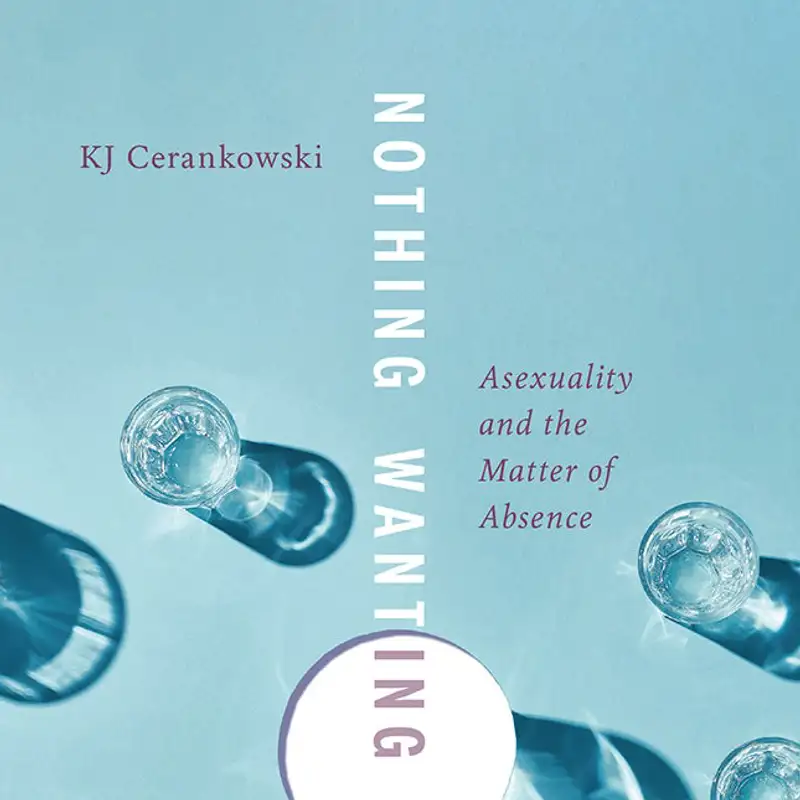
KJ Cerankowski:My name is KJ Cerankowski, and I'm the author of Nothing Wanting, Asexuality and the Matter of Absence. I am absolutely honored and delighted to get to talk about this book with Hill Melatino and Ianna Hawkins Owen today, both of whom have had profound impacts on my thinking over the years. But before I let them introduce themselves and jump into our conversation, I just wanna give our listeners a quick, hopefully, enticing overview of the book. So I guess what I'll say first is that in some ways, this is a book that really resisted being a book in the sense that it breaks a lot of conventions of form and structure. And even though it can be read in a linear manner, it strongly invites the reader to read otherwise, to wander, to meander, to dwell, and to rest.
KJ Cerankowski:And embedded in that invitation is the fact that the form, structure, and content are necessarily intertwined. Some of the key arguments are about meandering as method, about circling back, returning, refusing linearity, and teleology as an anticolonial, anticapitalist, and the antineoliberal ethos. So the indecisiveness, the uncertainty, raising more questions and lines of inquiry rather than arriving at answers and definitive argumentation are a part of its philosophy against telos and against exhaustiveness. So that is to say that I really want prospective readers to understand that the book is just as much about asexuality as it is about queerness and transness and nonbinary and neuroclearness neuroclearness and and neurodiversity and disability and race and racialization and more abstract concepts like matter and mattering, wanting and desire, absence and nothingness. And I guess on that sort of lofty promise of interdisciplinarity and a multitude of topics, I will turn to my colleagues to introduce themselves.
Hil Malatino:Thanks so much, KJ. I'm really excited to talk about this book. I'm Hil Malatino, and I currently teach at Penn State University, gender studies and philosophy. I've written a bunch of stuff, but most recently, in 2022, with the University of Minnesota, I released the book Side Effects on Being Trans and Feeling Bad. And I've been thinking a lot about some of the themes that appear in this book, KJ, for a number of years, so I am super stoked to talk with you about them.
Ianna Hawkins Owen:Hey, and I'm Ianna Hawkins Owen. I'm an assistant professor in gender and women's studies at UC Berkeley, And I think about asexuality and blackness and more recently, a lot about eating people. So I'm excited about that part of the book as well as the rest of it. Thanks for having me as a part of this conversation.
KJ Cerankowski:Yeah. Thank you both for being here and for spending time with the book. I think it's such a gift to have readers really dig into a book and to be able to discuss it with them. So, I mean, more than anything, I'm just really interested to pick up whatever area or question or thoughts you have, that you wanted to bring to the table.
Hil Malatino:I have kind of a big question that maybe is a place, one of many places we could start because, yeah, the methodology is meandering and the book is about dwelling and sort of finding routes through. So, a provisional place. But, I'm curious how your history of thinking and writing around asexuality, KJ, led you to these seemingly sort of broader concepts that I think preoccupy much of this book, absence and silence being sort of prominent among them. So just a big question about asexuality leading you to absence.
KJ Cerankowski:Yeah. That's a great question because in a lot of ways, I guess I've sort of resisted, and this is probably something that's a little bit of grad school trauma, to be honest, is sort of resisting being pigeonholed as, like, the asexuality studies scholar. And, you know, that was something that said to me as I was working even on my dissertation on asexuality where at a time when it was a relatively misunderstood and understudied concept. And so it was kind of like, how can I always sort of think about asexuality as it expands beyond asexuality itself? Right?
KJ Cerankowski:Like, what are the sort of concentric circles of that? But in addition to that, I think that for me, a lot of the early discourse as asexuality studies sort of grew in a as a field was really invested in identity politics. So much so that I would get emails from people just trying to verify that I myself identify as asexual as if that would give me more credibility to write about asexuality and talk about asexuality. And I've written very openly about my relationship to asexuality and asexual identification as someone who's sort of on the demisexual spectrum. But the ways in which, you know, acasexuality for me became much more valuable in terms of how it opened up my worldview on on intimacy, on relationality, on desire.
KJ Cerankowski:And I think with desire for me, it became more of a question of not, like, individual desire, sexual desires, but also a question of what do I desire for, or what do what should we desire for others and for the world. And so that sort of naturally breaks that open for me as a theoretical framework that really proved to be quite generative in terms of just the expansiveness that I think asexuality offers in refusing those kind of normative frames about, like, how we relate to one another, what are the sexual scripts that are we're supposed to follow. And I think queerness does that in a lot of ways too, but asexuality was something that I had a personal connection to that also just burst these things open for me and started I started thinking about the aesthetics of it, the politics of it, the ways in which it's rendered as absence. And I think as I've written about asexuality, I've bumped up against that question of how do you talk about something that even people who are part of that community who strongly identify as asexual sort of often define as a lack, right, or as something that it's not.
KJ Cerankowski:It's something that's always negatively defined and it's not like, you know, in the sense of as a sort of nothingness or as a missing or something lacking. And and I wanted I always wanted to push back on them. Well, what is there? Right? Like, there's something there for people, there's something there for me.
KJ Cerankowski:And so then I as I pushed on that question, I was like, well, there's always something there. And so that question of, is there ever really nothing? Is there ever really absence? Is there ever really silence? Seemed so intertwined with these questions I was asking about, not only asexual identity and identification and definition, but also just about how that shapes my perspective on the world and how I relate to the world.
KJ Cerankowski:As somebody who's, I think, always been connected to the natural world, that's where sort of, like, the queer and trans ecologies really came in for me as a way of expanding that asexual relationality and into a world that just is always defying our categories and always existing in the places where we say there is nothing in some ways. You know? There's part trauma and resistance and part just sort of, like, necessity in reclaiming asexuality as proliferative and generative because it's so easily dismissed as looking.
Ianna Hawkins Owen:Yeah. I just wanna say I also love just the opening of the book so much where you say, I think, exactly that sentence to want nothing is still to want. And I have a question about astonishment a little bit. I'm making a connection now for the first time to me and my little brother's favorite book when we were very, very small called, Hey, Will I See the Pyramids? And there's a section where the concept of nothing is being described to another little kid.
Ianna Hawkins Owen:And they and so they say, like, what is nothing? I ask. Nothing is when you're given a very small portion of ice cream by an adult And you look at the plate and at the adult, you ask for more. And they say, have a huge portion. And you say, that's it.
Ianna Hawkins Owen:That's nothing. I guess maybe you'd need to see the book to connect it to astonishment. But at the end of in the pages around the nineties, in the fungus section, you end with this invitation to be astonished. It also shows up near the beginning of the book too, where you write asexual attentiveness to the world, a mode of living that recognizes the fullness and possibility where there was once deemed to be nothing. And I just am curious to also hear expand a little bit on, like, how you arrive at astonishment as the reaction to trying to unpack what nothing is as opposed to maybe some other trajectories.
KJ Cerankowski:Yeah. I don't know that book, but I kinda wish I did know that book before I finished writing this book. Because I love that there's ice cream because it invokes this sort of pleasure. It seems adjacent to cake, which is a sort of symbol in the asexual community for welcome and pleasure and abundance, and how that becomes attached to this book that's also about astonishment is there's just a lot to think there about pleasure and astonishment kind of being connected. Yeah.
KJ Cerankowski:I think from the line that you read that asexual attunement is one that is attuned to abundance rather than lack and scarcity. It's about shifting, sometimes perhaps even inverting perspectives. To me, that inevitably leads to astonishment because how can we not be astonished by a world that we are practicing looking at differently? I see that as someone who's trying to always practice looking at the world differently. And part of, you know, what I was saying about the sort of refusal of certainty, the refusal of teleology is about this willingness to sort of always be learning, always be shifting perspective, always be growing, always being open to what knowledge can look like.
KJ Cerankowski:To me, that's just awe inspiring and wonderful. And then in some ways, it's just that I'm somebody who sometimes I just look at something as simple as a house sparrow flying off the eve of a house, and I'm just I just think, like, how can people not just constantly look at these little birds and think, like, these are beings that can fly. Like, how magical and wonderful is this? Right? Like, the world is constantly astonishing me.
KJ Cerankowski:The way that I'm framing this sort of asexual attunement here is one that's about inverting norms, resisting norms, like, looking anew. It seems to be one that necessitates asking that question. Like, how can we not continually be astonished by this world? Even in the pain and the violence, that there are still things I think about Roth Gey's work and these sort of, like, you know, the book of delights and the the inciting joy and these moments where we just in pleasures. Right?
KJ Cerankowski:That we those those are the things that need to coexist.
Hil Malatino:I was thinking as you both were talking about maybe sort of the inverse of this, mainly about how I think the way that we tend to think about sexual drives is about a winnowing and limiting of awareness. And the example that I kept going back to as I was contemplating that was the phenomenon of, like, being out in a club or some sort of social space with a friend. In my head, was with a friend. It was not me that was doing this, but it could have just as easily been me. But with a friend who is, like, very keen on hooking up, when you yourself aren't.
Hil Malatino:Right? And there's a way that there's this interesting split of attention where somebody is laser focused on a certain set of criteria or humans or what have you. In a context like that, if that's not where you're at, psychically, socially, whatever, your attention tends to drift, and there's a way that increasingly that relationship becomes sort of incommensurable over the course of an evening, or you end up diverging in your paths through that social space. And that's pre that feels present in your book, like, there's a sort of implicit critique of the sort of drive model of sexuality as an attunement that leaves so much out, or so much by the wayside, or at least can. I don't know.
Hil Malatino:Was just wondering more about that.
Ianna Hawkins Owen:That description of being in the club immediately made me think of being at ASA. Like, specifically, my very first ASA, every time I ran into someone that I kind of knew, I'd be like, oh my god, thank god, someone I know. And we'd be talking, and I could feel their eyes leave my face and look beyond my shoulder waiting for someone more famous to walk. I mean, not that I'm famous at all, maybe more interesting to walk by. I don't know.
Ianna Hawkins Owen:And that was sort of my defining experience of being there. And the first thing I think about even though awesome people go to ASA and incredible scholarship happens there, I feel like the scene of the club and the scene of the conference both bring me to the loneliness section of the book as well and, like, being lonely even when we're with others. And also these vignettes you share, KJ, of, like, raising the question of community and loneliness in all these spaces where the concept of overarching and, always already there idea of community is constantly offered as the solution to how hard it is to be a person.
KJ Cerankowski:One of the very first times I presented on the pleasures of asexuality at the National Women's Studies Association, I think I had more people hit on me at that conference than ever before. Here's somebody who can talk about pleasure. Right? And it doesn't have to be only this one kind of pleasure, which you get to, I think, this question of, like, aim or drive. What's the go goal?
KJ Cerankowski:But another thing that's coming up for me is in thinking about what both of you are talking about is this idea of wanting something from someone, which is fine. We want things from people all the time, and I I wanna accompany that. What I'm trying to do with the book is also wanting for. I think this gets to a little bit of of Hill what you're talking about is, like, how can we find the collaboration and wanting for? Sometimes there are fractures, right, in, like, in what the goal is, what the drive is, maybe what we want from something or someone.
KJ Cerankowski:And this is very much inspired by your work, Hill, in thinking about collective care and collective effect, and how can we work through those fractures? Right? There are momentary fractures and what somebody wants, but, like, how do we still hold on to that collective care that wanting for even in the face of loneliness or feeling sometimes not a part of the collective and that sense of collective care. I had a lot of hesitancy in writing about loneliness. I didn't want to name this current loneliness epidemic, specifically the male loneliness epidemic, because I just didn't wanna get wrapped up in that discourse.
KJ Cerankowski:But I think that it's something that is timeless, and so we can call it a particular epidemic at this time that's affected by certainly, like, a digital shape of the world, I think, in a lot of ways. But I think that loneliness is also sort of part of the condition of being alive. But I think that I felt particularly jaded in some ways and sort of feeling like this idea of community and sense of belonging is often thrown out with this assumption that there is a sort of understood collective and that there is a sort of shared goal that's not always stated and is not always an open invitation. So I was thinking, you know, how can I reshape what that can look like, especially in the moments when I feel most left out of those collectivities, out of those communities? I still have a sense of shared wanting for.
KJ Cerankowski:Like, there's nothing wrong with pursuing a hookup. Right? And, like and if both people are on the same page and it's like, cool. I'll wingman you whatever. But then if you start to feel like, I thought we were going out as friends in this way and then suddenly or I thought we were having this connection, but you're looking over my shoulder.
KJ Cerankowski:When does sexual drive get in the way? I guess maybe, you know, like an interesting question. It's interesting because I often feel like the question turned on me about asexuality is how asexuality offers some kind of solution to the ways in which sexual drive gets in the way. Right? Like, people often say, well, like, asexual people must be super productive because they're not just they're not pursuing sex or thinking about sex.
KJ Cerankowski:Right? As if not the only thing that can occupy people's time, but we all we all invest in different things and invest our time in different ways. And it doesn't mean that an asexual person would necessarily be more productive in any certain way. And in fact, I'm writing against that very notion of of productivity reproductivity and productivity in the sense of sort of demanding that someone is always using that time wisely, is always pursuing a goal. So I guess, you know, this is kind of like not to get too nerdy, psychoanalytical about it, but I'm thinking a little bit about Freud and the aim and the drive and, like, what would it mean to, you know, have a drive without a sexual aim.
KJ Cerankowski:Right? Or to have an aim without a sexual drive. And there's still aim. There's still drive. They are just not necessarily sexual.
KJ Cerankowski:So we can direct desire. We can direct want in all different directions. How do I think about this in the sort of the day to day moments of the club, of the conference, of the moments where we're trying to connect with one another, whether that's sexually or non sexually? How do we think about the multiplicity of desire?
Hil Malatino:There's a moment in the book where you're talking about psychoanalysis, KJ. To paraphrase it, it was like psychoanalysis is what's possible when what's possible what people can say to one another when they agree not to have sex with each other. And, that's interesting because, I mean, it would be one way to think about a friendship that doesn't have sexual components. So, one way into thinking about what friendship enables to, of course, the psychoanalytic dynamic and friendship are not the same thing. But there's a kind of expansiveness that I think we tend to assume shuts down once the sexual is introduced.
Hil Malatino:And a lot of queer theory, obviously, has worked against that, spoken against that, fought against that, and thought about the necessary sort of tension and imbrication of the sexual and the collective. But what I think is so compelling about sort of using asexuality as the starting point, is that it doesn't place that thorniness of sexuality at the center of social relationality, and then cohere everything around. I mean, obviously, right? This is like what's promising about asexuality studies for all of these things we've been talking about. But there's also this emphasis in the book to decouple desire from the sexual that I think also bears upon considerations of friendship and collectivity.
Hil Malatino:And I guess I'm wondering how tough that decoupling can be. I think there are so many forces that work against that decoupling, and also just the way that other people tend to understand motivation works against that. But then also what becomes possible in the space of that decoupling, and what that means maybe for a sort of more expansive sense of collectivity.
KJ Cerankowski:Yeah. I think, Phil, you're referring to Leo Bersani and Adam Phillips' book Intimacies, where there's a line in there where they say something yeah. Like, psychoanalysis is what, you know, what that's possible when people agree not to have sex with each other. As and I think their resistance to the idea that the analyst in in Alizan will always have this kind of relationship that necessarily turns toward the sexual. Like, the desire can't help but be sexual.
KJ Cerankowski:What opens up if that is the first agreement therapeutically, but also this question of around desire. Yeah. That's the sort of the the sort of starting point just that is is exactly that problem because even in asexuality studies, people authors will write desire, and they mean sexual desire as a way to sort of critique that focus on desire, sexual what they mean as sexual desire. And I think well, you know, I wanna say, well, woah. That implies that if you are trying to shift the focus to asexuality and you're launching this critique about a focus on desire, then you're essentially sort of saying that asexuality is desireless entirely, because that that very word desire is the sort of sexual desire.
KJ Cerankowski:The sexual is just easily dropped, and it does and it's sort of supposed to mean the same thing. And I and I guess that's part of this this argument for really that attunement. Right? Like, really being tuned in to the language we're using and being really careful in thinking about the capaciousness. That language and and that and that that desire is not just sexual desire.
KJ Cerankowski:How difficult that's super difficult because in any in any general conversation you have with somebody, like, oftentimes, desire will just default to, like, the meaning of sexual desire. Right? Unless it's very specifically directed and, you know, named otherwise. But I, yeah, I think this is something that's maybe not insurmountable, but a big a big call, which is to say, hey. Like, pay attention to the words that we use and how much they can mean so much more than we have sort of colloquially just kind of reduced them to a certain meaning, and and let's be more expansive.
KJ Cerankowski:But so, yeah, this is always is an argument for expansiveness. Yeah. And just wanting to embrace the the multiplicities of desire. As I'm talking about this and thinking about this question of also the collective, it makes me think a little bit from Cathy Cohen's work and thinking about coalition. This question of coalition in which how do we connect not in relation to identity, but in relationship to power and oppression in in order to shape our politics.
KJ Cerankowski:Right? Like, how do we bridge those differences in identity when we have similar relationships to power oppression that we can sort of join together in solidarity. And I think that's desire is a part of that too. I think, you know, this is another way to think about coalition. I mean, we what are the desires that we share for each other?
KJ Cerankowski:That capaciousness of desire is so crucial.
Ianna Hawkins Owen:I think going back to your quick story at the conference and, like, the event of being desirable partly because of speaking explicitly about a different form of access to pleasure people hadn't imagined till talking to you. But also, I think there's some element there too of being drawn to a thing when it seems less available. So that makes me wanna go to the fungus section because of the scene about seeing the mycology book everywhere and you already had it and gave it back. But then once you kept seeing it other places, then you did want it and you couldn't have it. And at that point, then you finally paid for it.
Ianna Hawkins Owen:I also wanna say I I felt immense pleasure at at seeing like my antics and bad behavior in print. I think that when I brought up the loneliness question before, I thought something that was really powerful about the book was also just, like, how much your friendships feature all throughout it, and also lovers and other relations as well. Hearing you hesitate to talk about loneliness in the context of all these other things and maybe even privileges of having, like, multiple friend scenarios and places to call upon and still deciding to talk about it. Made me think about I think it was in grad school when I read A Public Feeling or something. And I was, like, struggling to finish my dissertation and was so depressed.
Ianna Hawkins Owen:And there's, like, short chapter about being too depressed to finish the dissertation and then getting a job and just writing the last chapter as 15 pages to get at. And it just, it meant so much to me at the time to see that, you know, and it didn't need to be there. And so, yeah, I just wanna affirm, I felt like when I came across that part of this book, it meant a lot to me.
KJ Cerankowski:I just wanna say that I also read Ann Zekovich's Depression in grad school. I read it with fellow students, and I remember one of them saying, you know, she didn't really seem that depressed. Like, was she really she I don't know if she was really depressed. It's funny that you bring it up here because there's a sense in which I I did have this thought where it's, yeah, I do write a lot about different kinds of relationships throughout the book. So can I really be lonely?
KJ Cerankowski:Right? Like, am I really lonely? But as I write, you can still feel lonely even with people. And I think there's something that can be really political about wanting something that you're told you can't have or, like, a freedom that you're not granted. Right?
KJ Cerankowski:Like, maybe that's actually a good thing because it helps us keep fighting for the things that we're told we can't
Hil Malatino:There's a moment in the I believe it's the rot chapter where you're talking about mycelia. You describe it as a body without a plan, and that just seems beautiful and resonant and really interesting. I immediately, of course, this is surprising no one, I was like, oh, I wonder about this as an orientation to transition, or an orientation to transness. And to, you know, say a little bit more about that, you know, of course, we have the sort of conventional narrative of transition, is informed by a telos where, you know, you start at one point, you want to get to this other point, and you take certain steps to get there. And that's a fine understanding of transition for probably many people, but I think there are all sorts of alternative orientations to transition.
Hil Malatino:And when I read that bit in this chapter, I thought, oh, yeah. I mean, I think for me, what was interesting about transitioning is it was a way of getting out of a sort of grid of overdetermination and not having a telos any longer affixed to me. Or feeling, at least for a little while, right, or maybe just continuously, that I was not as sort of overdetermined by the plans that had been made for this body that I had happened to be born into. And that, of course, opens out onto broader concerns with trans ecologies and all sorts of stuff. But, yeah, The Body Without a Plan.
Hil Malatino:So rich, so compelling. I'd love to hear you say more about it.
KJ Cerankowski:I love that. I love when smart people read my book and see something that I didn't quite see but was obviously there for you know, because that's what transition has been for me too, has been about really being a body without a plan. You write about this quite a bit in my first book about the constant becoming and this refusal to imagine transition as point a to point b, but constant movement. To not have a plan is not to be purposeless, that I do things with intention, with purpose, but they don't always have a clearly defined goal. They're maybe moving toward something, maybe multiple goals drives aims desires, but the plan is maybe half baked, maybe not there at all, maybe is always open to revision.
KJ Cerankowski:And I think that's actually very trans. Any element of medical technology that I've engaged with toward what we may call transition has felt for me more experimental rather than planned. Like, where will this take me next? How will it make me feel? Will I adjust my testosterone or not?
KJ Cerankowski:Will I, you know, go off of it and on it? Like, all of these things, it all had purpose.
Ianna Hawkins Owen:That resonates also with some notes I took, but in the public friend universal public friend chapter where you ask, what if the illness is not gone? Everything that was once there leaves a trace. How does illness keep happening even when it's no longer definitively present? And you go on to offer half a dozen different ways into being with genderlessness or genderqueerness of the public friend. But the thing that I wrote in my notes was my tumor, my transness.
Ianna Hawkins Owen:Seeing Moonlight with you actually at the theater, not having seen the trailer or anything was, like, my egg moment. I didn't feel like doing anything about it was, like, within reach. And then suddenly, I had a tumor, and then I was like, I guess I have to get something done about this. I'll just do the whole thing now. And whenever I look in the mirror, there's like more missing where the tumor had been.
Ianna Hawkins Owen:And so it's like the mass itself is gone, but then the transformation and the way that it has influenced or informed or made other genderings possible is constantly present in a way that you know, you also have this create section where you go into all this, like, you're not saying transness is illness, etcetera. But I'd heard, you know, little bits about the universal public friend before, but I really enjoyed that a lot, that section. And also, I think your investigation into the supposed nonbinariness of the friend. And then throughout your research finding theythem pronouns, which everyone was attributing to this figure, actually had never been used by them. Also was oddly gratifying to read because I think you write that on 01/2003, theythem was imposed on the absence of evidence.
Ianna Hawkins Owen:And it reminded me of other moments of experiencing that imposition when that's maybe the only pronouns I've not tried out using. And when they get applied as if it is a stand in for not knowing after being told. Yeah. I just thought you really elegantly kind of unpacked what was going on there.
KJ Cerankowski:I love all of that. And I want to say something about this question of illness because I think this is a a really important framework where, for me, this is where thinking asexually and thinking about trans and transgender and transness and thinking about queerness and queer sexuality, historically, there are all these points where illness is a part of that narrative in one way or another, right, often through pathologization that tries to box people into categories and repair them in certain ways. And this is you know, this leads to things like conversion therapy and all sorts of diagnoses and and whatever. And I think that why that is important to name is because what I've really pushed up against because I work so much in trauma theory, and there's ways in which a lot of responses to trauma are also pathologized and categorized as mental illness. There's this, I think, this fear that crops up for people when they're trying to advocate for asexuality, especially.
KJ Cerankowski:I hear it a lot. But even any queerness, transness that this phrase, like, we're not sick. We're not broken. It's this move to kind of normalize something, right, and refuse refuse illness because it the diagnosis and the treatment has have been so historically violent. But it's really important to be able to carve open those spaces where we can say, like, actually, like, illness can be a part of a narrative, not that not this kind of specific pathologic pathologizing medical industrial complex formation, but other experiences of illness can be part of somebody's transition narrative.
KJ Cerankowski:Right? Like, the like, what you're talking about, the tumor. It can be part of somebody's journey in in terms of their sexual identity or sexuality or orientation or however they wanna describe them or define that. And to shy away from that, I think we lose something that is so impactful, and this is really also a part of my commitment to disability studies and group theory and neurokeerness. Right?
KJ Cerankowski:It's like is how do we actually resist to those those narratives that are so if not dismissive of any any narrative of illness are you weaponize it. Right? Weaponize it to to harm people and to justify violence. And if we let go of the importance that illness can have in a life, then if we don't tell those stories, that weaponization of illness continues to win. Right?
KJ Cerankowski:We don't get to tell these other stories that are actually valuable to how we understand ourselves in the world, how we understand relationships to our bodies, how we understand our own mortality, and our own ongoingness in in the face of it. And so I think that idea that it it leaves a mark is is really important. And I I I remember when I was you know, when somebody first told me in many, many years ago about the the public universal friend and was like, this would be right up your alley because they're celibate, nonbinary person. And I and I found that through line episode, that NPR through line episode, and I I was just so struck that the very first line of the episode, when Paul Moyer comes on, this historian, to to say it. And the very first line is the illness is gone.
KJ Cerankowski:And and I've I've just thought about that line over and over and over again because it's like, you know, like, again, that sort of that is is that it's not always gone and it an illness leaves a mark. Even as you're saying, if you cut the tumor away, there's some there's something there. Right? There's a scar. There's a memory.
KJ Cerankowski:There's a knowledge of what you went through, something that shaped you, something that maybe even, like, pushed you into a phase that you you didn't know you were ready to go into yet. Right? Something you had been thinking about but haven't haven't stepped into, but here you are. It changed your trajectory. It's an important piece of the story.
KJ Cerankowski:I just feel really committed to being able to tell those stories of illness and trauma without them being turned back on people in this way that just a focus on your own sin erasure might actually make space for the complexity of living. Everybody gets sick at some point.
Hil Malatino:I'm hoping we can stay with the public universal friend for a little bit, in part because, I mean, I think your writing on it was really beautiful and nuanced in a way that very little about that figure is. But, in the context of talking about the universal friend, you make a move to think their relationship to bodily transcendence is linked to the phenomenon of dissociation in relationship to illness, maybe also in relationship to gender. Who knows? But, that nexus of a sort of metaphysics of transcendence and dissociation is also very, very interesting to me, and tracks across, I mean, you can think of the universal friend in relationship to it, but also, I've been writing a bunch about Reid Erickson, who's this trans philanthropist in, you know, the latter half of the twentieth century, did the bulk of his work in the latter half of the twentieth century, who was really interested in high dose ketamine use, which is another means of maybe bodily transcendence via disassociation. But it just marks so many trans lives, and not just trans lives, but also lives marked by disability in some way, or navigating disability.
Hil Malatino:And, it is an instance where it's so clear that what gets read as a symptom is actually very much a survival strategy, and maybe much more than a survival strategy. And, in the case of dissociation specifically, it really clarifies that everything we might read as an instance of dissociation is also a reassociation if we reframe what's occurring. And I think that your work does that so beautifully. But I just wanted to think more together about that.
KJ Cerankowski:Yeah. I really I love that. And mentioning Reid Erickson and ketamine, it also just brought me to the other types of mushrooms that appear very briefly in the book, which also are the psilocybin trip is also an experience of transcendent. It also makes me think a little bit about more and more work coming out on detransition and reframing that as retransition or just ongoing transition. Right?
KJ Cerankowski:And the idea of, again, sort of inverting these negatives. Right? The d, the dis, that the dissociation is actually a reassociation. I really love that. Yeah.
KJ Cerankowski:Thinking about I think what I find so compelling about the friend is that the story of of the friend allows me to open up to these other possibilities of beingness that's partly about embodiment, but not all about embodiment. Saying that as somebody who's sort of allergic to religion in a lot of ways. Like, I am really resistant to it, but I find something really compelling about this notion of the aliveness of the spirit and the death of a of one spirit and the incarnation of another spirit in the same body, and then this kind of transcendent being that continues to live outside of the categories that have been demanded and placed on this particular body. We find that to be such a useful framework for thinking about trans existence in the face of of the state, perhaps even. I think especially this is a moment, which do I have to hold on to as a trans person in The United States?
KJ Cerankowski:How can I, in a sense, transcend, have the thing that I'm told I can't have again, right, as I still sort of fight for the right to exist and simultaneously making an abolitionist argument, so not trying to recuperate these categories of the state either? I mean, these are some of the things that I'm thinking about as you say this, Hella. I wonder if you have more thoughts on this because I I really like these ideas.
Hil Malatino:Yeah. I mean, the way that I've been trying to grapple with the present moment in relationship to this bit about reframing symptoms as strategies is actually, and maybe this is resonant for y'all, thinking about paranoia. And, I mean, on the one hand, I've been thinking about how intensely paranoid I am, right? Like, Just in relationship to the present moment, how intensely paranoid so many people are. But, of course, paranoia has all of this sort of pathologizing and pejorative baggage because it's understood as this outsized, irrational response to a conjuncture, to a situation, to an experience.
Hil Malatino:And, I actually think that what might look like paranoia for a lot of folks in this moment is just absolute pragmatism. But what does it mean that pragmatism manifests as paranoia? And also, does that mean for our relationship to the reparative? Because it seems really hard to come by. I mean, if you're being targeted by the state because of your documentation status, because of your position as migrant, if you're being targeted by the state because of being trans, etcetera, there's no easy relationship to be had to the reparative.
Hil Malatino:There maybe is no kind of repair. I don't want to say that. That's too hopeless, I think. But the reparative is hard to come by, and paranoia is very easy to grasp, and also maybe where we find ourselves anyhow. But there's this reaction, and I'm thinking with Sedgwick here in the Paranoid and Reparative, right, essay, but there's this reaction to paranoia in Sedgwick's work and in a lot of queer theory that's tarried with it, that immediately is like, well, no, okay, so we have to reorient the reparative, but never really troubles that, insofar as doesn't really think about how profoundly difficult the reorientation to the reparative is.
Hil Malatino:And for Sedgwick, it's just like a different reading practice, so you just mobilize a different reading practice. And that seems inadequate, especially if we're thinking about the current conjuncture, right, and the forms of paranoia it generates. Who knows where I'm going with this? Dwelling in the paranoiac and thinking about what else is there outside of a recourse to repair, I think is maybe where my brain's been at.
KJ Cerankowski:Yeah. It's it's interesting to that you say this because when I first started working on this book, the title was going to be saints, singles, and other sexual suspects. It was initially gonna be this kind of, like, case study of asexual, celibate, nonsexual figures and the ways in which they become these sort of sexual suspects because of their failure to participate in the sexual economies, essentially. But part of what I wanted to do with that was to flip the suspicious reading and and was sort of thinking about it as as a kind of paranoiac relationship. You know?
KJ Cerankowski:And then the book just became a whole different book. But there's some of that that's still there, right, is is reading with a little bit of suspicion. And I think I kinda do both. I think I've tried to do some reparative and paranoia reading, and I think this is in terms of thinking about how do we apply these abstract, these theoretical questions to the world we're living in. It is this I think, know, you said it sounds too hopeless, but it there are times when it does really feel hopeless, and it does feel that so that, actually, there's it has to be a nonbinary solution.
KJ Cerankowski:I think part of that is abolition. When you lose that prospect of the reparative, I think that's, like, leaning more and more into an end of the world, you know, to invoke de Silva. But that's also, I think, quite paranoid.
Hil Malatino:Or pragmatic. I mean, it's like
KJ Cerankowski:Or pragmatic.
Ianna Hawkins Owen:You're making me think also coming from another direction about the history of schizophrenia diagnoses being weaponized against black civil rights activists and the extension of that also into, yeah, reframing other kinds of feelings produced by your political conditions, framing them with this pathologizing language. Each time I think about being paranoid, then I try to reframe it as a kind of vigilance, even if I'm not sure what I'm being vigilant about. I want to ask you about redaction as well. I noticed the engagement with Christina Sharpe's Ordinary Notes, but the redaction section right away made me think of one of Sharpe's previous books in The Wick, in particular, the chapter on black annotation and redaction. She talks about it as a way to counter abandonment and another effort to try to look to really see or read otherwise.
Ianna Hawkins Owen:She also says that she sees black annotation together with black redaction not as opposites, but as I'm reading quotes as transverse and coextensive ways to imagine otherwise. And when you're in the archive and learning to read for redaction, that's sort of also an inversion where the redactions are these, like, white out spaces. Yeah. I was just curious if any thoughts that you wanna share just about, like, arriving at redaction in relation to annotation? Because there's also a part where you talked about marginalia too that I really liked.
Ianna Hawkins Owen:Love to hear more.
KJ Cerankowski:Yeah. Christina Sharpe is is like the master of juxtaposition and just making that so meaningful and producing something so new out of it is some it's obviously, like, a great influence on the ways in which I try to practice this work of juxtaposition, and I I wish I had remembered that chapter from that book. I'd read I'd read that book so long ago when it first came out, and it just didn't even come back up on my radar as I was running about rejection. I am in some ways getting to a lot of what you just quoted there in that. And I think I do that even in the all ends, no ends chapter where the body of the text is missing and only the numbers for the endnotes remain.
KJ Cerankowski:And so there's this play on the the missing body that's still very much present, but then we're left with with only the the ends, in some case, the feet when we I look at Renee Green's sculpture where only the the footprints remain of Sargie Bartman's body. But there's that play, right, with absence and presence redaction and annotation. And and I think with redaction too, right, the ways in which redaction to redact uses black ink, right, like black redaction ink, but also uses white out. So these things are that are sort of considered opposites, black and white, are both used for the same purpose. And the other way to think about and this actually came up during the, like, final, I think, like, copy editing stages.
KJ Cerankowski:One of the editors said, you know, what's interesting is that even redaction isn't really bulletproof that if you really wanna make sure something's gone, you have to cut it out, throw it away. So the only really, like, surefire way to really redact something without there being any trace is to to cut holes. And so I've been thinking about that a lot in terms of that also very present absence, like the hole in the page. You know, something was there that's, like, clearly there's a hole. And this idea also that I write about where if zero if we think about zero as this thing that you you look through and there's a whole world through that hole, you know, like, what's, like, what's actually like, when you look through these reduction holes, there's, like, so much fullness there.
KJ Cerankowski:This this thing where it's, like, something that seems like it should be opposite isn't. In the redaction itself, like, reading for redaction is about reading for the marks that the redaction leaves. And so one of the ways that I write about that is in this one archive in particular, they had whited out information that needed to be redacted, and then they photocopied the document. And so you get these sort of stutters on the Xerox where the whiteout was, like, kind of rough or where the whiteout went onto the line that the text was written on, so it whited out part of the line. So there's, like, a stutter in the line.
KJ Cerankowski:So you can see that there's something that was there. Right? So the redaction becomes, like, to to play with Christina, sharp a little bit, an annotation of the thing that was redacted. Yeah. And it's all part of this question of how do we read for absence, which is one of the the driving questions in the book is that, again, that attunement, that shifting.
KJ Cerankowski:How do we read differently for the things that are not there, that we don't believe to be there? And it's always going to involve some uncertainty.
Ianna Hawkins Owen:That chapter that has only notes and you flip back and forth, your reading tip that occurs deep, deep in there where you say, you love notes. I also like notes, but I usually read them after I've read everything else, which I think is tied to, like, a a different version of a neuroqueer approach to the text. But you mentioned that you always read with two bookmarks so that you can easily go back and forth. And that made so much sense to me. My experience of reading it, trying to follow you going back and forth felt a lot like walking through doors in that way where when you go into another room and you forget why you went there.
Ianna Hawkins Owen:But I think something that you also offered as another, like, kind of footing. Well, the bench, most of all, the chapter that just invites you to rest came at exactly the right moment for me. But also, in the latter half of the book, when it becomes clear that you reuse or recycle or something, like the foray notes, like, they come back again and again, or different sections of the book refer to the same note. But then maybe in that last chapter where you start repeating sections of reflection on the act of writing itself or thinking with your own thinking process made me feel like I was no longer lost since you were allowing your own digressions even more fully into the text in those moments. The meandering became really clear then too.
Ianna Hawkins Owen:And I wondered if would you say that those moments are representative of what is often on the page and hasn't been allowed to make it into the versions that we see in the public now? Or was it a chance to really write the way you're thinking and you haven't been able to write in that way before? Or a third question, which is, I also found myself being curious about what your r and r process was like and if there are things that your reviewers wanted from this that showed up or things that were here that no longer are.
KJ Cerankowski:I just wanna say, like, one of the things I argue in the book is that there's no masterful way to read. So I think, you know, however you read the endnotes is the way that works. But I do think that notes are so important and part of my motivation in writing a chapter that way. I mean, there were a lot of reasons in terms of wanting the argument to sort of take shape on the page to play with this idea of the the missing body. The other reason is that in teaching, my students just never read the notes or very, very rarely do.
KJ Cerankowski:And I'm always I'm always trying to come up with exercises and assignments and class that sort of force them to read the notes. You know? Like, I find a question that you can only answer if you read the note. And I thought, what would it mean to write something where if people really wanted to read that chapter, they could they had to read the notes because there's nothing else that they could read, really. So that was, like, you know, part of it, which is just sort of my own frustration with how few people read the and and and I guess, you know, another thing I'll say is that it's in the text that's been erased is that when I was working on my first book with Pumpedham Books, one of the things the editor said to me was so I had I think I had to convert everything to footnotes.
KJ Cerankowski:And he said because nobody reads the notes anyway. And if if we make them footnotes, they might they might glance at them. You know? So this idea this this idea that nobody reads the notes seems to be, like, a kind of pervasive one that I wanted to to kind of combat with that chapter. The book as a whole, though, I let the writing really be organic.
KJ Cerankowski:And even in terms of what archive I worked with, a lot of it was kind of just what kept popping up for me, like the John Cage, My Chromological Foray books, the things that I just you know, like, was in a bookstore and Paradise Rock caught my eye, and I grabbed it and I read it. And it's and it was just so compelling. I had to write about it. And these sort of these things that were just kind of coming up as I was thinking about these ideas, and it sort of seems like a it's a kind of collection of happy accidents in some ways. I wanna give a a shout out to a writer who's just so impacted me.
KJ Cerankowski:It was Lauren Berlant, and there's so much that is just inspired methodologically by the way that they worked. Like, I remember another person we lost recently, Beth Freeman, once told me that she was really inspired because she once talked to Lauren about something that they were working on at the time, and they said, I don't know what it's gonna be yet, but anytime I see something about Washington DC, I'm just collecting it. And so, you know, like and it's just just sort of, like, just collect the things that come across your purview, and then I thought you just start writing about them and see where they come together. And that was kind of how the book was was written and then obviously reworked and edited. So to that note, I was blessed with a really wonderful reviewer.
KJ Cerankowski:Nathan Snaza actually was the one who reviewed the manuscript in its entirety and just gave me lots of I I would say thanks to Nathan, more came into the book just because he would say, oh, this reminds me of this or this reminds me of that. You should look at it. And I would go grab it, and I would write it into the book. Through in the first review, there was another reviewer who who really wanted a more structured argument, and that was just something that it was, like, incapable of doing. It was sort of against what the book was even trying to do.
KJ Cerankowski:So that's the thing that I just resisted. But, overall, I'm just really grateful for the the review process and working with Leah Pennywork as an editor who just really encouraged me to be weird and even to the point that it did present some production issues. And I was so grateful to the folks at the press who, you know, when they told me they couldn't do something, and I said, but I think you can. It's maybe that's a, like, a rule of the publishing industry is that you can't have a note repeat itself. But I think, like, technically, let's try to figure this out or, you know, whatever it was.
KJ Cerankowski:Even making the saturated film stills that are barely there was, you know, like a a process. But we everybody worked really hard to make the book come together. I'm just really grateful.
Hil Malatino:I wanted to mention your obsession with Agnes Martin and Yaya Kusuma, and specifically, the works East River and one of the Infinity Net paintings, were hung next to each other at your home institution, and you kept going back and looking at the two in relationship to one another. I was so struck by that, in part because I love both of those artists. And, especially, I've been, like, especially obsessed with Agnes Martin and Agnes Martin's last drawing, which is not a grid at all, but like a little potted plant. There's a whole Brooklyn Rail article on it that I'll send you later. But, yeah, I just wanted to hear you talk about those artists and those specific works, maybe, and your relationship to them and the relationship of those works to the process of bookmaking.
Hil Malatino:This making this book, not bookmaking, but making your
KJ Cerankowski:You know, this is another sort of, like, series of happy accidents. I think Yahya Okusama's work, I think I didn't even really know. I had been to the is it at the mattress factory, I think, in Pittsburgh where they have two permanent installations of her rooms? And I'd been there, and I didn't really follow much. And then the Infinity Rooms did the big tour around the country, and I went when it came through Cleveland.
KJ Cerankowski:And I was just I and then I ended up at the end of that show picking up her autobiography. And that was where and that was when I was like, oh my gosh. She has all this fascinating stuff to say about her own obsessions with, like, the phallic structures as, like, overcoming her own fears of sex. There was all this resonance, right, with with some of the the things I was thinking about with asexuality and infinity, that sort of, like, expansiveness. And she she's, like, she's sort of, like, working in this negative space, but turning it into this infinite space.
KJ Cerankowski:And that just drew me in. And then I think I got more into Agnes Martin because I was teaching this class called sexual absences. And the museum at Oberlin College where I teach is is an incredible museum, and we have amazing staff there who will say, like, do you wanna bring your class in? Like, let's work with you. And so I told them the theme of my course, and one of them pulled an Agnes Martin print for some reason that they felt like it fit the course theme.
KJ Cerankowski:And I can't remember the title of the work, but it's a smaller pink grid. And then and then at some later show, I saw the East River painting, and then they had moved it again, and it was next to the infinity net. And it was this whole series of, again, these kind of happy accidents that just led me to this kind of intertwined journey with both artists. And this again, this kind of just, like, an observation and almost astonishment with how these things kind of came together for me as I was thinking about these artists and then reading more about their lives. And then and at the time, I was having a lot of conversations with who then went on to publish this essay, like, Ace and Arrow Lesbian Art Through Both Artists.
KJ Cerankowski:That was actually came from a lot of the conversations that we were having together about these two artists. And so I and and I think that one of the things that I always I often find myself sort of jumping off from where this kind of entry point that Pigeon Bot often makes, which is really attached to identity politics. And that's where I find this resistance because I don't I think it's limiting, and I don't think it actually quite captures interaction with the art itself. It's sort of more focused on the artist and who they might have been and who their lovers were or not, whatever, which is fine. It's just not what I'm so as as interested in.
KJ Cerankowski:So I wanted to just offer something that was a little bit more expansive than that essay, that brought these two artists together in this way that I had already been preoccupied with. And I think it was just over the course of a few years that they they kept kind of popping up for me, and and I just I just follow them. You know? Just follow those trails, walk through those doors. I just wanna say thank you both so much for your just your thoughts and your questions and the ways in which you revealed things to me that I didn't even fully grasp were coming through in the book.
KJ Cerankowski:And, you know, and as I said, it's just such a gift for some people I really admire to spend some time thinking with me and thinking with my my writing. So it's just just so much gratitude.
Hil Malatino:That's so fun, KJ. I like I love your work so much. I love reading it. It's always a pleasure.
Ianna Hawkins Owen:All of you are cool as hell and also so thrilled that Minnesota published this book and worked with you to realize your vision of of what a book could be. So I'm really excited for my students to read it.
Hil Malatino:Yeah. I'm definitely assigning it to in my fall grads.
KJ Cerankowski:Oh.
Hil Malatino:Like, stoked about it. And, I have a whole footnote assignment that I do every time I teach this grad seminar. So, it's like perfect for it.
KJ Cerankowski:I love that. Thank you.
Narrator:This has been a University of Minnesota Press production. The book Asexuality and the Matter of Absence by KJ Sarankowski is available from University of Minnesota Press. Thank you for listening.