Abolitionist thinking, practical realities, and radical change
I think it continues to be really important to articulate an alternative vision of democracy, of safety and justice.
Kirstine Taylor:Abolition as a political theory is really emanating from activist spaces and from activist thinking.
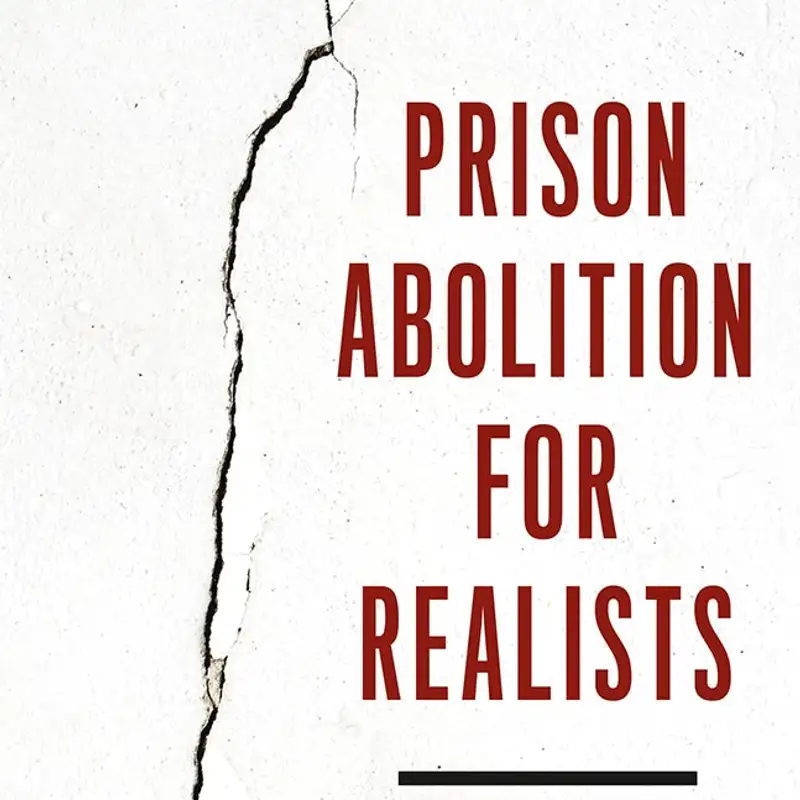
Anna Terwiel:I'm Anna Terwiel. I'm a political theorist at Trinity College in Hartford, Connecticut, and I'm the author of the book Prison Abolition for Realists. I'm here today with my friend and colleague, Kirstyne.
Kirstine Taylor:Hi, Anna. It's so nice to speak with you today. I'm Kirstine Taylor. I teach at Ohio University as a political theorist and person who studies law and race, and I'm so excited to be able to talk with you about your book, which is just a phenomenal tour de force through the really wide world of abolition. I think I just want to start, Anna, by asking you, you know, you've written this whole beautiful and rich book on abolition, and I want to know what drew you to abolition and what keeps you here.
Anna Terwiel:Thank you. I think intellectually, initially, the work of Foucault brought me to abolition, like Foucault's problematization of the prison, his discipline and punish, also his work with the prison's information group, the in the early nineteen seventies. So kind of as I got to know his scholarship and his scholarship and activism around prisons as I was in grad school, I found that a really powerful and interesting set of ideas, you know, an analysis that both places prisons at the heart of what modern societies are that really centers it as an important issue for thinking about a political order, and then also that offers this radical critique that invites us to question whether, in fact, this is an institution that we want to preserve, that it actually advances aims that we think it advances. And then learning about the the jeep, seeing an example of someone who's not only this famous scholar of prisons, but also was active in collective action around prisons in France in the early nineteen seventies. So I think intellectually, Foucault has been important for me.
Anna Terwiel:I think practically during my time in graduate school in, in Chicago, I did my degree at Northwestern. I had the good fortune to be connected to the Prison and Neighborhood Arts and Education Project, PNAP. And that's this wonderful organization. It's a collective of humanities, scholars, of artists who offer classes at Stateville Prison, a maximum security prison outside the city. I mean, as I see it, they really do abolitionist work.
Anna Terwiel:Like, not only are they trying to find ways to really practically support incarcerated people through and and and advance the idea that that everyone deserves access to art and education, but they also then brought the artwork and the writing of incarcerated folks at Stateville to Chicago, you know, organizing exhibits in in in galleries and just really kind of practically undermining the the separation, the warehousing of folks in in prisons by bringing their work, even if not, like, the people themselves, but at least, like, their work, their art, their poetry, back to to Chicago communities. And I've continued you know, I moved from Chicago to to the East Coast for my current job at Trinity College. And as I've worked at Trinity, I've stayed, active in in prison education. I became a few years ago co director of the of Trinity's Prison Education Project. Initially, that was founded twelve years ago as a as a project to offer courses at, York Correctional Institution, the state's jail and prison for women and people assigned female at birth.
Anna Terwiel:And we were able to expand it to the Hartford Jail closer to home and to to offer more classes. So as a practical engagement with the prison system that we currently have and as a practical effort to try to support people who are trapped in it and also to advance a vision of a world where we all have access to education, we all deserve education, we all deserve art, to challenge this commodification of education as an expensive thing that only some can afford to buy and certainly to challenge any notion of a division between deserving and undeserving people, that's why I've kind of kept doing that work.
Kirstine Taylor:Okay. Yes. And I can see the resonances between, like, what you've just described here and just the whole framing of this book because, of course, the title, Abolition for Realists. And you begin the book by noting that prison abolition has been called unrealistic, it's been called idealized or naive, out of touch, a quote unquote heaven on earth that will never pass. This is a reference maybe to would be supporters of abolition, or supporters turned critics maybe, who may think, well, sure, a world without police and prisons sounds lovely and ideal and would seem to remove these intractable problems like police brutality and racial criminalization and mass incarceration, but surely this is a pipe dream.
Kirstine Taylor:And so I wonder if I might invite you to just diagnose how you see people in the mainstream or the public framing abolition and what you have found so unsatisfying or maybe even dangerous about those framings. And you gesture in such a radically different direction about the realism, and so maybe I can just get you to think with us a little bit about that.
Anna Terwiel:Yeah, absolutely. I use this language of realism and this characterization of abolition as a realist project to try to, as clearly as I can, dispel what I see as just a really persistent mischaracterization and misunderstanding of what this project is. When people think of abolition as pie in the sky dreaming or just kind of or as, like, just a moral critique of, oh, these things are bad, and we would like to not have them in our society. They're really not seeing the kind of critique that abolition offers, which I think is really grounded in reckoning with what police and jails and prisons are actually doing in our society. So I see abolitionists as more in touch with the reality of what these what what the criminal legal system is doing then the idealized understandings of, like, oh, like, this is what's keeping us safe, and, like, this is what is distinguishing the good people from the bad people and delivering justice.
Anna Terwiel:So abolitionists look at the punishment apparatus, see contemporary US mass incarceration, like see how in the last decades of the twentieth century, incarceration rates have just exploded and how most folks, trapped behind bars are, marginalized in one and typically multiple ways. Like, are people of color. Most are most are poor. Prison conditions are generally bad and oftentimes terrible. Felon disenfranchisement then further adds an exclusion from the political order from the from the democratic right right to vote.
Anna Terwiel:And, like, meanwhile, a lot of harm and injustice is allowed to continue. And so when abolitionists see this constellation, they observe kind of the the the function of the criminal legal system in maintaining and deepening racial inequalities, class inequalities, political hierarchies where some are full citizens, but there has to be a class of disenfranchised or otherwise othered folks while a lot of social problems, while a lot of interpersonal violence, while a lot of harm and injustice continues. So I understand Abolition as a Realist Project because they look at the actual functioning of these of these institutions. And also because then based on that understanding of what our society is currently doing or how it's currently organized and how the inequalities are maintained, that they understand that efforts to build a more democratic world are going to have to challenge the the the power structures that exist, and that that abolitionists offer really practical, pragmatic forms of collective interventions to try to build a more democratic world. So we can yeah.
Anna Terwiel:We can talk more about all the ways in which I think abolition is realist. One thing I'd wanna add now is what is lost when this whole body of work is just dismissed? And I think in one ways, it's a foreclosure of thought or like a foreclosure of critical thinking. That's so often when you're like, hey, you know, maybe when harm happens, even serious harm, like we could develop collectively responses that do not involve someone being caged for years on end, like the immediate response of just like, well, that's not gonna be possible. Or maybe we can think of a non punitive response, but like not for serious crimes, like just kind of the immediate the foreclosure of further thinking about what actually we might be able to accomplish together or what other visions of justice we might be able to come up with.
Anna Terwiel:And that along with that foreclosure of thinking is a foreclosure of experimentation and so a kind of self disempowerment and a collective self disempowerment because not only are we not thinking about how else we could respond to serious harm for instance or how else we could advance policies that would make American society as a whole more equal, more just, but we're also not trying anything in practice together. So there's a sense of like, Oh, well, I can't think of anything. Nothing must be possible. There's nothing I could do with others to make a difference. And so the dismissal of abolition then serves a limit around thinking, a kind of continued kind of passivity or lack of engagement and collective action as the status quo is maintained because we've kind of decided or declared that there's no alternative.
Anna Terwiel:And so like the current system with its inequalities and violence and political disenfranchisement just kind of then has to continue.
Kirstine Taylor:Yeah, it sounds like what you're saying here and in the book is that it's partly abolitionist commitment to realism, to seeing the world as it actually is, that is so connected to a vision about the possibility of change, like becomes a theory of how to transform the world to make it actually more free, democratic, etcetera.
Anna Terwiel:Absolutely. That's really nicely put. And in that sense, my invocation, so I said earlier, just like, well, I use this term realism to try as clearly off the bat on the cover, dispel this misunderstanding, this mischaracterization, right? But it's also a way to say realism does not have to mean resignation. Like, seeing the world clearly and seeing the many inequalities and the many forms of violence to which I think abolitionists are are really attuned.
Anna Terwiel:There's like the profound limitations of American democracy when mass incarceration is allowed to exist, like when mass disenfranchisement is allowed to exist, like when mass poverty is allowed to exist. But let me just say, realism in political theory is an approach that understands itself to be also really attuned to the realities of political life and struggles for power and the existing injustices. It can sometimes then follow that we just need to not hope for it too much in the future. Like, if we're gonna be a realist, not only should we see the present clearly, but we should really temper our hopes for change for the better. And abolitionists reject that.
Anna Terwiel:They hope and work for radical change, but, like, based on an understanding and a reckoning with the world as it currently is and the forces that hold it in place. So for instance, you know, abolition is feminist. Abolition feminists want to end gender violence. And rather than seeing gender violence as a problem of individual bad men or people who, you know, do individually bad things, there is a sense that gender violence, like many other forms of harm, is rooted in gender inequality and just like systemic structural heterosexism. And that if you want to advocate for gender justice as abolitionist feminists do, we need to change those foundations.
Anna Terwiel:We need to change those structures. And if you don't, you just kind of cannot effectively make the world safer and more equal and more just.
Kirstine Taylor:So we encounter in your book, of course, abolition as a realist political endeavor with a theory of change related to it. But also, we encounter not so much a singular abolitionism in your project, but rather several abolitionisms. There's a multiplicity that you draw our attention to. And there's a great diversity intellectually and in kind of like the more committed versions of theories of change, actual activism in abolitionist spaces. And so there are all these shared concepts maybe, but then there's a lot of internal tensions within abolition.
Kirstine Taylor:And so I'm wondering if you can just maybe orient readers to what you see as some of the places of shared commitments, but then where do we see abolition in its multiplicity? Like where does it kind of start to diverge for you going in different directions and coming up actually with different theories of what transformational change might actually envision for us or produce for us.
Anna Terwiel:Yeah. I'm a scholar of abolition. I'm a political theorist and saw it as one contribution I could make from that position. I'm I'm not inventing abolition. I'm I'm not someone who's, like, thinking of what it should be in isolation or, like, I'm not an architect of the movement.
Anna Terwiel:I think that's language that Diva Woodley uses in her book about the movement for black lives. But as a theorist, I can theorize what other people are doing as they are thinking and organizing for abolition. And as part of that work, I think it's important to identify differences that weren't always recognized or theorized or or understood very clearly, but that show up in abolitionist writings and politics. So, like, it's clear in some way that abolition is not homogenous. Like, and of course it isn't.
Anna Terwiel:It's a it's a rich, long standing, diverse endeavor. I go back to some of the history in in in the book, back to the 60s and 70s in Europe and The US. Like, there are many lineages informing this project. And so, of course, you would find theoretical political plurality there. But but and and and my book, I I I hope to contribute a kind of a mapping and a clearer understanding of that of that plurality.
Anna Terwiel:So, yeah, like, are areas of commonality? At the most narrow level, everyone thinks prisons are bad. That prisons as an institution of all modern societies, that these are institutions that are violent, that are oppressive, and that don't actually effectively serve the positive goals that we think they do. Like, that these are not institutions that make societies more just or safer. Some of the folks I discuss, some of the, like, the legal thinkers, I mean, Nils Christie, Luke Holzmann, focus on criminal legal processes.
Anna Terwiel:And so keep their critique pretty focused on how do we as a society respond to harm and what are the serious drawbacks when you kind of look at it closely of the criminal legal system as a system for doing that. So Nils Christie talks about how victims or survivors are just left out of criminal legal systems or like processes in which professionals, lawyers, prosecutors take the take the lead, and then ultimately some individual is punished, but the survivor is is left to themselves. Communities are not involved. The punishment doesn't actually serve anything. And then thinkers like Foucault, thinkers like Angela Davis, their abolitionism is much broader than these criminal legal systems, criminal legal processes or even prisons as institutions.
Anna Terwiel:Know, Foucault sees prisons as one instantiation of carceral power that is just characteristic of of modern societies. That's part of normalization. That needs to be challenged, but it exists, like, in institutions and places throughout society. Yeah. Davis and folks working in that black radical tradition see prisons as one aspect of, like, deeply racially and economically unjust orders and connect their abolition to profound economic, political, and social change.
Anna Terwiel:So in that sense of if the question is, like, what are folks really focused on? There there are different answers and, like, you know, prisons is the is kind of, like, the heart of the Venn diagram or something. And then people branch out in different directions. But it's not only that people take different objects of critique, like where do we focus our energy? Are we really looking at courtrooms and and prisons, or are we thinking more broadly about racial capitalism and and normalization?
Anna Terwiel:There are other also just different theoretical styles of critique that I identify in the book. I develop this distinction between paranoid purist and agonistic abolitionist approaches. And I develop that differentiation through close readings of specific authors, Foucault for paranoid abolitionism, Liat Ben Moshe for politics of purity, and then Angela Davis for agonistic abolitionism. But I don't argue that any of these authors could be reduced to that term or that that term or approach or, you know, kind of typology that I developed that that is unique to these authors. Like, close readings are a way to illuminate something important in these thinkers that I think also travels.
Anna Terwiel:You also find it in other abolitionist thinkers and places. Yeah. And so I mentioned earlier, like, you know, Foucault was really important for my thinking about prisons and my interest in abolition early on. And in the course of writing the book, I became more and more dissatisfied with the abolitionism that he offers or like the politics perhaps of that critique. So I theorize it as a kind of paranoid approach using paranoid not as a clinical label, but thinking of Yves Kosovsky Sedgwick's understanding of the term to describe a particular style of critique that has its own political implications.
Anna Terwiel:And the style is one of a very broad ranging critique. So like for Foucault, that's that's carceral power. Like, it's like a very big concept that you can find in lots of places. And then to try to expose that carceral power in lots of places where it might be hidden and to try to anticipate where you might not suspect it. So it becomes a kind of analysis that has a really sophisticated sense of carcerality and carceral power and how there might be carceral logics at play in different parts of society, but that is so worried about itself replicating what it critiques that Foucault actually ends up, and he's famous for this, like, not really recommending anything.
Anna Terwiel:It's like not not being able to affirm a positive vision of like, so we're you know, we have this critique of carceral power, but we are in favor of abolition democracy or we are in favor of gender equality, and we think that, like, x, y, and z measures or experiments could advance that. And so, you know, increasingly, was like, this is just like politically for me unsatisfying. It's it's it's theoretically powerful as a critical framework, but I think it's it's not in practice very helpful for collective organizing to score political wins and dismantle the prison industrial complex and, like, advance a more a more democratic order. In my discussion of Liat Ben Moshe and, like, that's a she is a wonderful theorist of deinstitutionalization, the deinstitutionalization movement in the middle decades of the twentieth century as a kind of early abolitionist endeavor in the sense that many, many people were de facto confined or trapped in disability institutions, so mental hospitals, later on nursing homes, other forms of like segregated living for people with disabilities. So she's she offers this wonderful history and thinking about that moment in the past, which is really important for abolitionists to think about because it's an example in the not too recent past of a large system of confinement that was in some ways successfully disestablished in the sense that these large institutions no longer exist.
Anna Terwiel:They closed their doors and people with disabilities were part of the movement to make that happen. But I find that in her work as well, and she's informed by Foucault until you see some of the same, what I call paranoid thinking, that there's an exquisite attention to the insidious ways that, you know, even though you close one system of confinement, like, you know, carceral logic show up in the smaller group homes that came to replace these large institutions. So she's very attuned to how when we try to make change, you can end up with more of the same. But the book does not offer a kind of political strategic program for, like, what we would want to see and how concretely we might try to get it. And and then, like, yeah, like, in the process, there's gonna be risks and compromises and trade offs.
Anna Terwiel:But that kind of tactical strategic political vision doesn't get off the ground in an approach that is so focused on tracing what has gone wrong and and the risks of co optation, the risks of insufficient breaking with the carceral. And so I've already been alluding to what I advocate for in the book, the strategic democratic politics that knows it can never get abolition right, that it will never be finished, that any win fought for will have its own, you know, disappointments, exclusions, but that nonetheless, we need to do what we can together to struggle strategically, tactically, to the best of our ability for the wins that we can score. I see that, most clearly in in Angela Davis's work, and I theorize it as agonistic, abolitionism, you know, building on the the agonistic political theory of von Ehanek in particular.
Kirstine Taylor:Yeah. I wanna, like, pause for another minute here on this, like, paranoid abolitionism and the problems of a politics of purity as you theorize it in the book. You call it, like, they're coming up with a strong theory. Right? The idea that as a strain of abolitionism that strives to make a clean, uncompromising break with carceral power.
Kirstine Taylor:And there's something on the one hand, you seem to say, like, very insightful about that, but actually the practical aspect of that is that people find that they cannot move in that situation. So it feels like the critique of that strain of abolitionism is one in which actually change starts to recede into the background. And this is such a powerful part of the book where you're kind of calling our attention to seeing that as a real danger in that kind, that style of abolition. And I know that, yeah, that really just grabbed me when I was reading your text, and especially when you are positioning it as a different way of thinking to Davis, who you introduce in the central I I think about it as, like, the heart of the book, chapter three on Angela Davis. Not only is it the center chapter, but she feels like it's the beating heart of the book in the sense of you bring her in as a theorist and, of course, an activist and scholar as well, who is orienting us towards not a clean and uncompromising and pure theory of abolition and change, but change, you write in the beginning of your book, you say, but, quote, a change wrought through subversion and conspiracy, reclaiming and repurposing, experimentation and revision.
Kirstine Taylor:This makes me think about how very messy the world is and how very messy political change and transformation can be. So I'm wondering if you can maybe talk a little bit more about Davis's abolitionism and what draws you to that abolitionism in particular?
Anna Terwiel:Yeah, you know, I think Davis and some of the other thinkers actually, I mean, Bukob and Moshe, they identify abolition as a kind of revolutionary project, like as this big effort to change everything, because it's a radical critique, it's an intersecting critique. And so there's an understanding that, like, the roots of our society need to be transformed if we want to effectively end, you know, move from society with racialized mass incarceration to a society with meaning like, much more meaningful, robust democracy and democratic political, economic, social freedom. When the critique is that big and, like, when the goal is revolution, it can be daunting. If if you want to change basically everything, it can start to seem like you need to somehow break with everything in order to advance your politics. And as you say, like, that's just that can be demobilizing.
Anna Terwiel:Like, it can make it seem just very risky to try to undertake an initiative because you might actually, without knowing it, replicate or somehow end up contributing to the problem that you're trying to address. I think Davis is so attuned to the messiness of politics and to the inevitable remainders of any political project that we need to, through collective action, try to dismantle the systems we don't like and try to decarcerate, like try to get people out of jails and prisons, try to diminish the footprint of jails and prisons in our society while also working for something better. And working for something better is a risky, dangerous business. Like, it's much more reassuring to be just against prisons, to call for prisons to close, to call for budgets to be cut, to say no. And there have been important strands of abolitionist political thinking that have focused on the no and on the negative, thinking of Thomas Matthiessen, who, you know, based on this worry that, like, the moment that you say what you are for or that you articulate kind of a positive agenda, that you risk coaptation, that, like, then you're not on radical terrain anymore.
Anna Terwiel:This temptation for many abolitionists to prioritize the no and to prioritize the dismantling and the saying what you're against, that is a necessary part of of abolition, of just, like, you can't have an abolitionist theory or politics and just kind of forget that we're trying to diminish the footprint of jails and prisons. That dismantling has to be part of it, but you have to also build alternative structures or, like, start to prefigure or advocate for something else and something better that will inevitably have its own shortcomings, limitations, disappointments. And Davis doesn't ever use the language of agonism. I bring that term from the work of Hanig and others to illuminate this facet of Davis's thinking that valorizes democratic efforts to build a more democratic world with that awareness of the inevitable limitations. Once we really see clearly that it's okay that our alternatives will not be perfect, because really in political life, like, nothing ever is perfect and no institution ever delivers what we what we hope for, that can be liberating, I think, and empowering or, like, that can take away some of the fear and worry and and anticipation that can keep people from mobilizing or, like, from taking up collective action.
Anna Terwiel:So, yeah, again, like like, I think Davis, like, shows a a vision of abolition that can be just inspiring and encouraging empowering in a way that I think, yeah, paranoid abolitionism often isn't.
Kirstine Taylor:Yeah. Oh my gosh, that's so powerful. And it's making me think actually a lot about you have this amazing chapter called The Power of New Rights. It's chapter five in the book, and it hasn't escaped our attention, I'm sure, that we're having this conversation in the 2025, and we're currently living under a political regime that seems dedicated to eroding, if not severely limiting or eradicating, a lot of the rights that have been so hard fought and won in the past. And so I'm looking at this language of new rights and thinking about the strain of abolitionism that you're drawing out from Davis's thinking.
Kirstine Taylor:In that chapter, you articulate a new right that you call the right to comfort. And in a time, especially when we're seeing the erosion of rights, that might feel disempowering. Of course it is in some ways because we're living under a really, really difficult regime right now. And yet for you, rights and law in that way is it's there's still something there that is a resource for hope, for action, for possibility of change. And so I'm kind of wondering if you might talk a little bit more about that, either with the right to comfort in particular or more just anything else you might wanna introduce to listeners and readers about the role that rights and an engagement with law in the state can actually play and has played in abolitionist thinking, and maybe especially how we can think about that at a time of what would seem to be great despair regarding rights.
Anna Terwiel:Yeah. I mean, despair regarding rights and just despair regarding the political order as a whole. It's it's a really bad and dispiriting time, of course. Part of what I'm thinking is we're being offered a kind of fascist strongman politics that I think abolitionists are best equipped to see through. Right?
Anna Terwiel:Of just, like, no one knows better than abolitionists that claims to deliver freedom and happiness and justice through just, like, brutal violence meted out by some man to whom we need to be subordinate and grateful for our protection. Like, that that is absolute nonsense and that it doesn't have to be that way. Like, that we can orient our lives and our political societies differently, that justice and safety do not have to be, and actually, in meaningful ways, not advanced through militarized policing and, the kidnapping of people, but that we can advance justice and safety by making sure that people's basic needs are met. It's October 31 as we're as we're talking, and so SNAP benefits will very likely end in many parts of the country tomorrow. And so people are going to go hungry.
Anna Terwiel:That is not a way to provide safety or justice or security or democracy for for anyone. So I think abolitionists, their vision, you know, it's like it's an antidote, and it's the antithesis to strongman politics and one that is focused on care and mutual aid and making sure that everyone's needs are met and trying to undo the structures of inequality that produce so much harm and so much violence, right, like whether it's poverty, whether it's gender oppression, racial oppression. Because we know that it doesn't have to be this way, I think it's important to keep talking and thinking about how else our world could be, thinking about what other functions the state could perform and what other functions, law, and rights could fulfill and could advance. The right to comfort is meant to be a provocation. I develop it in the context of these debates around extreme heat in prisons.
Anna Terwiel:It's a really urgent problem that is just getting worse and worse as global warming gets worse and worse. People every year in custody are exposed to temperatures that, at the very least, impose enormous suffering and that also just harm people's health and can kill them. You know, there are debates about, well, you know, prisons need to be uncomfortable because that's part of the of the punishment and, like, we don't want it to be a comfortable environment because then we're not punishing. That in response to that to say, you know, what if actually we all, whether you are incarcerated or not, whether you are convicted of a crime or not, what if we deserved to be comfortable? Like, what if that was the principle that we organize ourselves around?
Anna Terwiel:Like, it's crazy, but also it's kind of exciting. What if we thought about having a pleasant like living in a pleasant surroundings and having, like, enough to eat and, like, having not just enough to eat, but also, like, being able to enjoy all sorts of kind of creaturely pleasures. Like, what if that was what abolitionists are going for? So I think it continues to be really important to articulate an alternative vision of democracy, of safety, and justice. And I think rights claims can be part of that work.
Anna Terwiel:And the state has to be part of that vision too because we're seeing with the current administration, like, just an extreme growing of the punitive arm, right, of just, like, ICE, the ICE budget being higher than it's ever been. Like, a sense of just, like, all this investment in the punitive arm of the state while the federal government is being dismantled, while the Department of Education is being, all but destroyed and, like, while food stamps are about to run out. Like, the state doesn't have to be this way if we fight for it and and are able to win through political strategic action and through, like, the social movement building that abolitionists have engaged in for decades, the state could fulfill another function. I mean, in this sense, you know, Davis, of course, is so informed by Du Bois and Du Bois' thinking about the Reconstruction era. I take even just the example, like, thinking about Reconstruction as something that abolitionists could learn from as an example that profound political and economic change has happened in American history.
Anna Terwiel:Like, it's realistic. Right? It's, like, it's very, very difficult. It took a civil war, but it was possible, and it did make significant changes even if those were, you know, subsequently, some of them were overturned and they were never as fully realized as they should have been. But the state has to be transformed, and that has to be something that we fight for.
Kirstine Taylor:Yeah. You're absolutely right to bring up Davis's focus on Reconstruction era and her use of Du Bois. I think it's such a powerful historical example, and this also calls our attention to there's something about I think you talk about this in the book too, that abolitionists take a really long view of history. Their realism isn't just about what is unfolding right now. And of of course it is.
Kirstine Taylor:Like, that is, of course, part of their endeavor in politics and activism. But what has struck me so much about reading your book and my other engagements with abolitionism is how historically minded they are. And I think you're drawing our attention too to why that is, is because not only is it important to know our history, but actually their art history is a resource for contemporary or current abolitionist thinking.
Anna Terwiel:Oh, of course. And I think it is interesting that Foucault, although he was a historian and although discipline and punish is a genealogy, that, like, his use of history in abolitionism, like, it works to problematize and to unsettle the idea that, like, prisons are necessary, natural, eternal, you know, because he reminds us that not too long ago, public torture used to be an accepted form of punishment. And he he shows us, like, how relatively recently prisons became the dominant means of punishment in the late eighteenth and early nineteenth centuries. So in that sense, like, his use of history can create some space by revealing contingency where we might have thought that there was necessity or eternal something something eternal about prisons. But he does not give us an example or trace kind of the history of struggles around and against prisons or the history of social movement organizing for another kind of political vision.
Anna Terwiel:So you get a use of history to problematize but not necessarily to inspire. When we think about the history of deinstitutionalization as Niag Ben Moshe does so well, we get an example of, like, okay. Well, people were able to shut down largely one form of, like, an enormous system of confinement, but to a large extent, like, building up something better has failed for many reasons. The ascent of neoliberalism, like the defunding of community care initiatives. The housing crisis soon happened, lots of folks who were once, institutionalized then found themselves unhoused.
Anna Terwiel:But so, like, we have an example history where just like, Like, it is possible to dismantle one system, but then we don't get the sense of kind of a successful accomplishment. The turn to Reconstruction, Du Bois calls it a splendid failure, but still splendid and still I mean, some of the constitutional amendments have endured. And Davis then doesn't just stick with Reconstruction, but and I'm thinking specifically of Our Prison's Obsolete. She traces this continuity of, you know, so there were struggles against slavery. They were partially successful.
Anna Terwiel:I mean, slavery I think the the civil war put an end to one to chattel slavery, but then ultimately, Reconstruction was overthrown and Jim Crow segregation and lynching needed to be abolished. And that happened, but also only partially successfully, and now we have mass incarceration. So that sense of inscribing abolition in a longer history, not just the history of, like, oh, the oppressive systems that need to be abolished, but, like, to inscribe abolition in a history of longstanding freedom movements, social movements fighting for change, change that has never been perfect, change that has never won the day but that folks need to have nonetheless committed to struggle for. That can also give some hope, I think. Right?
Anna Terwiel:Like, be able to then inscribe yourself in a longer tradition of, you know, people before you who fought for abolition in different times in different ways.
Kirstine Taylor:Yeah. I'm thinking about that, especially with the politics of today, and we've talked a little bit about that already. It is such a despairing time right now, as you've put it before. We're, what, five years past 2020, which not only, of course, was the time of COVID, but was a time of incredible massive uprising and the entry of abolition and abolitionist thinkers into the mainstream, where suddenly you get the opinion pages of The New York Times, Maryam Cabba, making the case for abolition, just among the one of many examples of a kind of public conversation around that, which now feels very far away in some ways. And I wonder, Anna, if you can speak to the hopefulness you're seeing with regard to seeing abolition as such a long game.
Kirstine Taylor:Abolitionist thinkers strive not only to see so far into the past, but they're seeing so far into the future too. And at one point, I think it's maybe in the introduction that you point to, like, the politics of the ordinary around abolitionism, that there's an engagement with the everyday, the ordinary, the real, the actual, and this like, longer lens. And so I guess my question, if I have one, is, like, how is it a hopeful time for us? Because if I'm reading you correctly and Mariam Kaba and Davis correctly, it's always a hopeful time, Even if it is incredibly despairing, if we're seeing incredible state violence at the time, there's always reason to hope. And I'm wondering if you can kind of help orient us and maybe where you're seeing that unfold.
Anna Terwiel:No, absolutely. I mean, there's a lot of reason for despair in the sense that there are just horrific injustices happening and accelerating. And yet, we should not resign ourselves to the inevitability or necessity of these current political developments. And so I think how Kaba puts it is is hope is a discipline. Like, it's not just like a thing that you naturally feel, but it's part of a commitment and an orientation to the long term to do the abolitionist work now, you know, with the knowledge that it's a long game, that there's going to be setbacks, periods of just intensified repression as we're seeing now, but to not resign ourselves to it, to refuse to let the other side win, to refuse to accept that the American state can never be other than what we're seeing it turned into now, or that we have to resign ourselves to a future that is more of the same or worse, to do what we can, and sometimes in a very small and ordinary and humble way, to try to keep a different future alive and to do what we can to make that other future more possible.
Anna Terwiel:And so this is why you said this. Like, yeah, there's it's always a time for despair, there's always a time for hope. And in a sense, there's a choice. There can be moments like 2020 when it seems that there's tremendous progress and potential and that, like, we're winning. And and then there are times like now where it's like, my goodness.
Anna Terwiel:It's the intensified fascist repression. But in both instances, to see ourselves as part of a multigenerational struggle for something else and something better. In some of the mobilization against the ICE attacks, I think that that's a really good example of the kind of abolitionist collective action to build power together and do what you can to push back against repression and and advance something else. I've been struck by you know, I've I've gone to some some legal trainings over the past couple of months around, you know, like, know your rights. If if you encounter ICE, what can you do?
Anna Terwiel:And there's been such a difference between the kind of, like, okay. Like, this is what your rights are technically and, like, this is you know, so you have a right to record official government activity. And so, like, these are the rules to follow, and these are the rules not to follow. That's helpful to a degree, and it has its place, but it's really different from the kind of collective responses that we're seeing in Chicago and elsewhere also where I live of information sharing around, like, creating hotlines around, like, suspected ICE activity and then organizations sending out verifiers to see if the threat is real, the kind of collective organizing to try to, in a direct way, obstruct or otherwise try to protect our neighbors from arrest. I see that as abolitionist work.
Kirstine Taylor:I love that so much because I wonder if there's a difference between thinking about something as, oh, I am now engaging in abolitionists organizing our work, which I think is some people's approach to abolition. But there's almost this organic approach to abolition that you're describing, where it's just people who are showing up to actually protect their neighbors or the kids down the block or whoever it is in their community, in their city. This strikes me as one of the secret weapons of abolition is the fact that, and this is made back to the Foucauldian idea originally, that it is also everywhere, even if it's unnamed and not framed by individuals who are engaging in that work, there is still an abolitionist orientation to just the practice of showing up to protect each other.
Anna Terwiel:Yeah. Absolutely. You know, these questions about Antifa and, like, whether or not it's a it's a movement and an organization. And but to your point, you don't have to be a card carrying. You can't even you could be a member of one of the many local initiatives or, like, and some with national visibility, like critical resistance.
Anna Terwiel:One of the strengths of Abolition is its rootedness, like its connection to to practical action. It's a set of ideas, and and there are many books on Abolition, and they're connected to an an infrastructure on the ground. And I think that's so crucial for that ability to translate critique into practical, effective, collective action on the ground. So in that sense, like, there are actually lots of opportunities to become a card carrying abolitionist if you're not one already. That said, there's a lot of work that doesn't travel under that name that nonetheless showcases a similar democratic politics and should also be recognized as abolitionists.
Kirstine Taylor:I mean, does get me to my question about abolition and political theory or abolition maybe as political theory. We're just talking about practices that are unfolding on the ground as community members are trying to protect themselves and each other. That kind of work of extending oneself into the community as an abolitionist practice, again, even if it's unnamed. And this is getting me to think about how you approach abolition in relationship to political theory? I mean, you you've talked already about how you as a theorist are not an architect of abolition, even though you're engaged in abolitionist organizations and thinking.
Kirstine Taylor:But I'm kind of wondering if you can get us to think about, again, what is this relationship between abolition and political theory? It feels like the theory of abolition or abolition as a political theory is really emanating from activist spaces and from activist thinking. Like, if we're wondering where this political theory comes from, this happens, of course, in the strain of black political thought more generally of who are the the black political theorists that we might think of. It's Du Bois, it's Fanon, it's all of these people. And these are activists as well, right?
Kirstine Taylor:And I'm kind of wondering if that's similar for abolition. And then in what ways can we maybe see everyday people then as both activists and thinkers and theorists, really? Right? So when those everyday Chicagoans show up to protect their community members, they're doing something, of course, practical on the ground, but they're doing something for us ideologically too.
Anna Terwiel:Absolutely. Yeah. I think political theory can sometimes identify with the state or seek to solve problems for the state or justify like, try to come up with answers for when and why particular state practices like punishment are justifiable. So, like, a lot of thinking about should punishment aim to, rehabilitate people, or is this about deterrence, or is it about, like, retribution? Like, what is the justifying principle for punishment?
Anna Terwiel:And in like, abolitionists invite us and and political theorists and and us generally to unsee like a state, to see and think more about politics like an activist. I'm thinking of, like, Erin Pineda's book, I think, seeing like an activist on the civil rights movement. Theorizing the political order not from the perspective of the people running that political order, but from the perspective of the folks living in it and living on on its margins, especially. Right? On the one hand, it's it's already there in the canon, like, the incredibly powerful and influential thinking of folks who are scholar activists in, you know, I mean, that includes Foucault.
Anna Terwiel:Includes Davis. That includes Salon and Dubois. So kind of seeing how theoretically generative that connection to political practice can be. And even for folks who aren't scholar activists or, like, people or or groups that don't have a foot themselves in the academy, the kind of thinking and theorizing and perhaps institution building that activists do, that that too is often a form of political theory building that is incredibly relevant for thinking about politics and social change. In chapter four of the book, I focus on the the work of CARA, Communities Against Rape and Abuse, this transformative justice organization that existed for a period of time in in Seattle.
Anna Terwiel:And so it's a group of activists that were trying to deal with well, the Communities Against Rape and Abuse, trying to deal with with gender violence without relying on police and prisons and developed the document I I draw on is this text they published in a in a volume by Insight. It's called taking risks, and they describe their vision for what they think it looks like to hold people accountable for sexual violence and how practically, like, through what steps and what kinds of process you might realize or to approximate kind of that vision of of justice. And so it it's a contribution to feminist political theory. It's a contribution to thinking about justice and to thinking about different democratic processes that can generate helpful outcomes. My book first three chapters focus on these all are activists, then chapter four is an activist text I take as a as a piece of political theory.
Kirstine Taylor:Yeah. It really drives home the point that abolitionism is always oriented towards the real, and it's coming from not only a perception of what the problems are on the ground as people are experiencing them and trying to deal with them, but also just that the theory of change, where we started this conversation, is also coming truly from these activist spaces that are trying to really handle serious problems and also trying to envision something completely different and to hold both the real and a kind of vision of the future in one's brain at the same time. It feels like a big thing, like in the best way. That's what I love so much about the thinking I'm seeing in your book and what it's getting me to think about now sitting here with you.
Anna Terwiel:No. And the only thing I'd add is, like, holding the real and the future we want and then also really taking seriously our own ability to contribute to advancing that future. This was a collective of folks who had the courage to come together and offer this vision, develop it, experiment with it. The text includes three examples of loosely case studies of, like, here are three scenarios kind of loosely based on on reality, and they're not perfect. That's another thing I really respect.
Anna Terwiel:Right? It's kinda back to that agonistic abolitionism of, like, we're not gonna be able to get it right, but, like, no one can, and and the criminal legal system certainly can't. And we can together act tactically and strategically to realize a different future.
Kirstine Taylor:Yeah, it's incredibly beautiful.
Anna Terwiel:I would love to invite you to say a word about your own book that came out earlier this year and any other part of your own research you'd like to share.
Kirstine Taylor:Thank you, Anna. Yeah, listeners might not know that we're colleagues at different institutions. We know each other professionally, but we're also quite good friends who speak quite often and read each other's work often on abolition and the carceral system. So Anna, yes, I did just have a book that came out earlier this year on the transformation of the Southern carceral system from the chain gang era into modern prisons and why the South saw fit to completely reorder their system of punishment. And I think a lot about racial capitalism, and I think a lot about social movements to end racial violence, including some movements that are abolitionist in orientation.
Kirstine Taylor:It's been a joy to think with you as both of our books are coming out this year.
Anna Terwiel:Oh, the same. Absolutely. I could not have written this without your help and the writing group and so much support from others. So really great gratitude, and thank you so much for talking today.
Kirstine Taylor:Oh my gosh. It was my pleasure. I had such a phenomenal time talking with with you about your amazing book. Everyone should go and read it.
Narrator:This has been a University of Minnesota Press production. The book Prison Abolition for Realists by Anna Terwill is available from University of Minnesota Press. Thank you for listening.